In brief
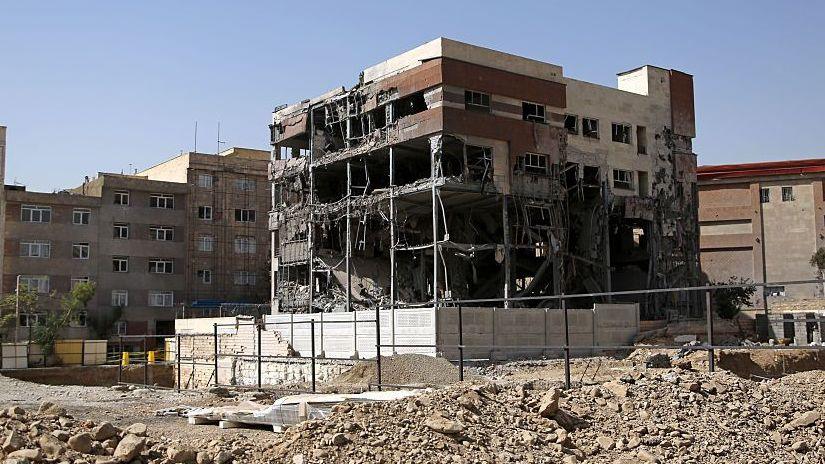
The US‑Iran conflict has entered a seventh month of escalating attacks and stalled diplomatic efforts. Experts say the latest sanctions and missile strikes are unlikely to break the stalemate. Jason Campbell views the US strategy as a prolonged move to weaken Iran and hopes for a deal. Dr. Aniseh Bassiri Tabrizi argues Iran will wait for concessions rather than capitulate. Nicholas Hopton urges the US to return to the failed MOA‑of‑June for a negotiated settlement that would gradually alter Iran’s internal power structure.
The prospect of an imminent agreement to end the US‑Iran conflict remains unlikely. Strikes continue and rhetoric is hard‑line on both sides.
The United States has moved into a new phase of a sweeping economic blockade aimed at pressuring Iran to stop attacks on shipping in the Strait of Hormuz. The channel, a key commercial route, has effectively closed since the US and Israel escalated the conflict in February.
A Memorandum of Understanding (MoU) signed in June, intended to lead to a permanent ceasefire and a 60‑day deal, has now expired. With the conflict at its seventh month, we ask three experts how the situation may unfold.
US hopes military and economic pressure will weaken Iran’s negotiating power
Jason Campbell, Senior Fellow, Middle East Institute, Washington DC
- The US objectives in Iran remain unclear as the White House continually re‑evaluates acceptable political outcomes.
- Military action alone did not achieve quick results; now both financial sanctions and targeted strikes are used.
- The administration appears content with a static status quo: keeping the blockade and occasional attacks to keep shipping channels open without causing an oil‑price shock.
- US officials hope new sanctions will compel the regime to negotiate from a weaker position.
- Iran is likely to demand a high price to reach a resolution, which the Trump administration finds untenable.
Iran will wait for US concessions
Dr. Aniseh Bassiri Tabrizi, Associate Fellow, Chatham House
- Recent strikes do not alter Tehran’s war calculus; the regime remains primed for an increased economic squeeze.
- The embargo strains an already fragile economy, compounded by structural issues and domestic protests.
- Iran does not yet see economic pressure as enough to force a change in its calculations.
- The country waits for the US to return to the MoU or offer a concession; it will not bow to pressure or alter its approach.
US knows what to do – go back to the ceasefire deal
Nicholas Hopton, Distinguished Fellow, Royal United Services Institute, London
- A sudden escalation will not force Iran to surrender; China, Russia and other trade partners do not back unilateral sanctions.
- Iran can continue to disrupt the Strait of Hormuz, threatening global markets.
- The White House’s exit strategy should be to bring EU‑SD‑dated MoU to life – a negotiated settlement that weakens hardliners.
- An agreement would signal progress, lift sanctions, and affect the Islamic Revolutionary Guard Corps’ economic leverage.
- While the path to a new regime is complex, intended gradual engagement could yield a less radical Islamic Republic.
Concluding point: The US and its partners appear to be stuck in a messy, inconclusive scenario that hurts all parties involved.