In brief
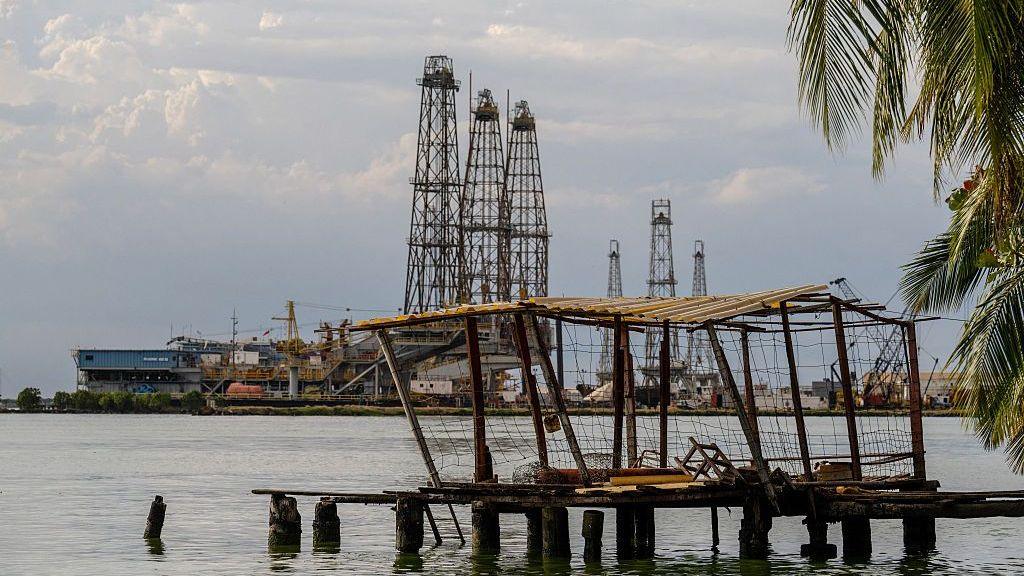
President Donald Trump has declared that the United States has secured a pact with Venezuela to control more than 65 billion barrels of the country’s proven oil reserves. The deal is presented as a historic win that will boost U.S. oil output, cut fuel prices, and provide a much‑needed $100 billion in foreign investment for Venezuela. While Venezuelan interim President Delcy Rodríguez lauds the agreement, energy analysts question whether it can overcome existing political, logistical and legal obstacles. US officials say the contract will give the U.S. a 55% stake in a joint venture managed by a private operator, with no cost to taxpayers. The move follows the U.S. administration’s increased pressure on oil pricing amid supply disruptions associated with the Iran war and has raised complex questions about international law and sovereignty.
In a bold statement, President Donald Trump declared that the United States has secured a deal to take over control of more than 65 billion barrels of Venezuela’s proven oil reserves. The announcement follows a brief excerpt from Trump’s speech that framed the pact as a “historic” step, promising a doubling of American oil stocks and a substantial drop in domestic gas prices.
"The agreement will more than double American oil reserves and substantially lower gas prices for all Americans," Trump wrote.
Venezuela’s interim president, Delcy Rodríguez, praised the pact as a catalyst for the nation’s economic revival, saying it would bring an estimated $100 billion in private investment, support thousands of high‑paying jobs, and bolster regional energy security.
Energy analysts expressed skepticism, noting the persistent challenges of political instability, an unreliable power grid, and limited export capacity that have historically deterred foreign investment in the country’s oil sector. David Goldwyn of Goldwyn Global Strategies warned that "no precedent exists for the U.S. government leasing operation of Venezuelan oil fields," and questioned whether the agreement could withstand legal scrutiny under Venezuela’s constitution and hydrocarbons law.
According to U.S. officials, the deal will give Washington a 55% stake in a joint venture, managed by a private operator in Venezuela, with no financial outlay from American taxpayers. The U.S. Secretary of State, Marco Rubio, hailed the accord as "a huge win for both the American and Venezuelan people," though details regarding the partnership structure remain sparse.
The administration’s push for a new oil strategy follows the U.S. capture of former President Nicolás Maduro in January, when the former leader was brought into the United States to face drug‑charge indictments. Trump’s proposal is framed as a means to counter steep global oil prices driven by the Iran war and strained supply via the Strait of Hormuz.
The agreement is reportedly set to develop 17 strategic oil fields, each boasting a proven potential of 65 billion barrels. While the U.S. claims no cost to taxpayers, the deal could still trigger legal challenges or force a lengthy approval process, leaving some stakeholders wary of its impact on oil supply gaps and the broader energy market.
The announcement has reverberated among investors and policymakers alike, as it potentially shifts the balance of petroleum production in the Americas and could alter regional dynamics in the coming months.