In brief
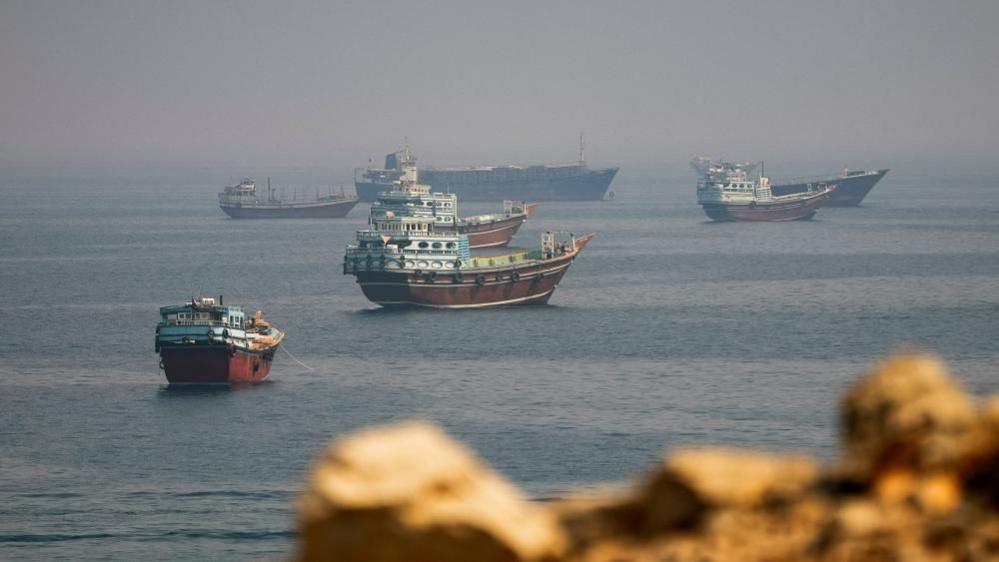
The U.S. Central Command confirmed new airstrikes against Iranian Revolutionary Guard Corps (IRGC) sites on Tuesday after alleged attempts by Iran to target commercial shipping and U.S. forces in the Strait of Hormuz. According to U.S. officials, strikes began at 12:00 ET (16:00 GMT), and Iranian state media reported four projectiles hitting Chabahar and Konarak counties. The IRGC has condemned the U.S. action, warning of severe retaliation, while Iranian authorities noted additional explosions on Qeshm Island, Konarak and Bandar Abbas. The latest strikes follow earlier attacks on Iranian forces at Larak Island, marking the first confirmed U.S. assaults on the nation since late July.
American forces resumed air strikes on Iranian targets after U.S. Central Command announced that the nation’s Islamic Revolutionary Guard Corps had been accused of a series of attacks on shipping lines and U.S. military deployments in the Strait of Hormuz. The strikes began at 12:00 ET (16:00 GMT) on Tuesday.
Iranian state media reported that four projectiles hit the Chabahar and Konarak counties, while the IRGC warned that the U.S. would face severe repercussions if it were to retaliate. The announcement came amid a growing escalation of tensions in the region, with the U.S. government describing the attacks as a preemptive response to Iranian claims of aggressions.
The IRGC’s spokesperson, Hossein Mohebbi, condemned the operation as a “grave mistake” that would lead to retaliation. He further asserted that the U.S. would suffer “severe punishment” if it continued its offensive actions.
These latest strikes come in the wake of earlier assaults on Iranian forces—most notably, a December‑July attack on rocket launchers on Larak Island. They are part of a broader U.S. strategy to deter further Iranian provocations following the missile shoot‑down of an eight‑missile attack on a U.S. military base in Jordan and Iran’s failed attempts to place sea mines in the Strait of Hormuz.
Iran’s semi‑official Tasnim news agency also reported that explosions were heard on Qeshm Island, in addition to Konarak and Bandar Abbas, highlighting the severity and extent of the conflict. These reports corroborate the ongoing flare‑up in the region, which continues to draw international concern.
Following the aggressive U.S. statements, President Donald Trump warned that any future retaliation from Iran would prompt a much stronger military response, claiming it would “not be the biggest attack of them all.” He promised that “the US will hold heavy losses over casualties” for the Islamic Republic, indicating an escalating threat level.
The U.S. and Iran’s actions are now being closely monitored by other regional powers, underscoring the high stakes involved as the tension in the Gulf escalates further.