The killing of a Hindu man during recent violent protests in Bangladesh has pushed already strained ties between Dhaka and Delhi into a deeper crisis. As the two neighbours accuse each other of destabilising relations, questions are growing over whether their once close, time-tested relationship is fraying beyond repair.
In India, the episode has sparked protests by Hindu nationalist groups. The man who was killed - Dipu Chandra Das, 27 - a member of Bangladesh's Hindu minority, was accused of blasphemy and beaten to death by a mob last week in Mymensingh, in northern Bangladesh.
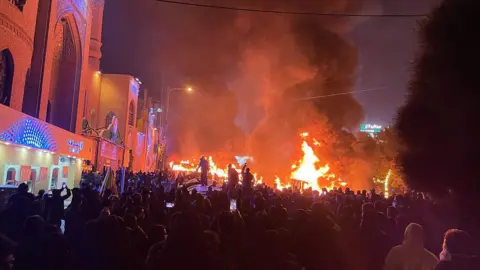
The incident happened as violent protests broke out over the murder of Sharif Osman Hadi, a prominent student leader, in the capital, Dhaka. Hadi's supporters alleged that the main suspect, who they say is linked to the Awami League - the party of deposed prime minister Sheikh Hasina - had fled to India, further fuelling anti-India sentiment in Muslim-majority Bangladesh. Bangladeshi police, however, said there was no confirmation that the suspect had left the country.
In recent days, the South Asian neighbours have suspended visa services in several cities, including Delhi, and accused each other of failing to ensure adequate security for their diplomatic missions. The two countries have also summoned each other's high commissioners to raise their security concerns.
Riva Ganguly Das, a former Indian high commissioner to Dhaka, issued a grave warning and stated, I sincerely hope tensions don't escalate further on both sides, adding that the volatile situation in Bangladesh made it difficult to predict the outcome of events.
\Anti-India sentiment in Bangladesh is not new. A section of Bangladeshis has always resented what they see as India's overbearing influence on their country, especially during Hasina's 15-year rule before she was deposed in an uprising last year. The anger has grown since Hasina took refuge in India and Delhi, so far, hasn't agreed to send her back despite several requests from Dhaka.
In the aftermath of Hadi's killing, some young leaders are reported to have made provocative anti-India statements. In recent weeks, Bangladeshi security forces had to stop protesters from marching toward the Indian high commission in Dhaka. Last week, a mob pelted the Indian assistant high commission building in Chittagong with stones, prompting outrage from Delhi. Police later detained 12 people in connection with the incident, but they were released later without any charge.
Brutal incidents like the lynching of Dipu Chandra Das have added to the anger on the Indian side. He was accused of insulting the Prophet Muhammad and met a gruesome end at the hands of a mob. Videos of the killing went viral, inciting wider outrage.
Amid the backdrop of increasing violence and civil instability, both countries find themselves at a critical juncture. As the interim government in Bangladesh prepares for elections, experts warn that escalating tensions could lead to further violence, particularly from radical factions looking to exploit anti-India sentiments.
With both sides calling for measures to protect their diplomatic environments, the prospect of rebuilding trust between India and Bangladesh appears crucial for regional stability. Analysts emphasize the necessity for an elected government in Bangladesh to address ongoing challenges, while India must navigate the changing dynamics carefully to prevent deeper rifts.
In India, the episode has sparked protests by Hindu nationalist groups. The man who was killed - Dipu Chandra Das, 27 - a member of Bangladesh's Hindu minority, was accused of blasphemy and beaten to death by a mob last week in Mymensingh, in northern Bangladesh.
The incident happened as violent protests broke out over the murder of Sharif Osman Hadi, a prominent student leader, in the capital, Dhaka. Hadi's supporters alleged that the main suspect, who they say is linked to the Awami League - the party of deposed prime minister Sheikh Hasina - had fled to India, further fuelling anti-India sentiment in Muslim-majority Bangladesh. Bangladeshi police, however, said there was no confirmation that the suspect had left the country.
In recent days, the South Asian neighbours have suspended visa services in several cities, including Delhi, and accused each other of failing to ensure adequate security for their diplomatic missions. The two countries have also summoned each other's high commissioners to raise their security concerns.
Riva Ganguly Das, a former Indian high commissioner to Dhaka, issued a grave warning and stated, I sincerely hope tensions don't escalate further on both sides, adding that the volatile situation in Bangladesh made it difficult to predict the outcome of events.
\Anti-India sentiment in Bangladesh is not new. A section of Bangladeshis has always resented what they see as India's overbearing influence on their country, especially during Hasina's 15-year rule before she was deposed in an uprising last year. The anger has grown since Hasina took refuge in India and Delhi, so far, hasn't agreed to send her back despite several requests from Dhaka.
In the aftermath of Hadi's killing, some young leaders are reported to have made provocative anti-India statements. In recent weeks, Bangladeshi security forces had to stop protesters from marching toward the Indian high commission in Dhaka. Last week, a mob pelted the Indian assistant high commission building in Chittagong with stones, prompting outrage from Delhi. Police later detained 12 people in connection with the incident, but they were released later without any charge.
Brutal incidents like the lynching of Dipu Chandra Das have added to the anger on the Indian side. He was accused of insulting the Prophet Muhammad and met a gruesome end at the hands of a mob. Videos of the killing went viral, inciting wider outrage.
Amid the backdrop of increasing violence and civil instability, both countries find themselves at a critical juncture. As the interim government in Bangladesh prepares for elections, experts warn that escalating tensions could lead to further violence, particularly from radical factions looking to exploit anti-India sentiments.
With both sides calling for measures to protect their diplomatic environments, the prospect of rebuilding trust between India and Bangladesh appears crucial for regional stability. Analysts emphasize the necessity for an elected government in Bangladesh to address ongoing challenges, while India must navigate the changing dynamics carefully to prevent deeper rifts.