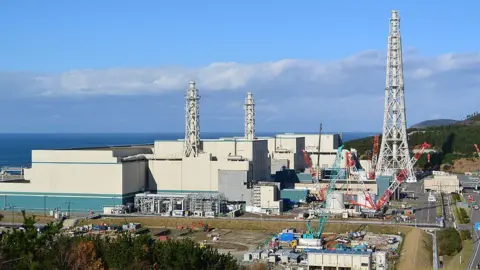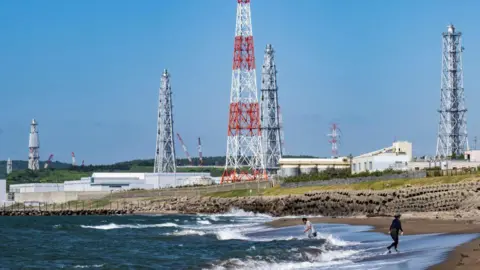
Japan has restarted operations at the world's largest nuclear power plant for the first time since the 2011 Fukushima disaster forced the country to shut all of its reactors.
The decision to restart reactor number 6 at Kashiwazaki-Kariwa, north-west of Tokyo, was taken despite local residents' safety concerns. It was delayed by a day because of an alarm malfunction and is due to begin operating commercially next month.
Heavily reliant on energy imports, Japan was an early adopter of nuclear power. However, in 2011, all 54 of Japan's reactors were shut after a significant earthquake led to a meltdown at Fukushima, resulting in one of the worst nuclear disasters in history.
This latest move marks an important milestone in Japan's nuclear power reboot, which still faces considerable challenges. The seventh reactor at Kashiwazaki-Kariwa is not expected to be operational until 2030, and the other five reactors may be decommissioned, which decreases the plant's total capacity significantly from its former 8.2 gigawatts.
The aftermath of the Fukushima meltdown led to widespread evacuation and lasting distrust in nuclear power. Criticism has been directed towards the plant's owner, Tokyo Electric Power Company (TEPCO), for inadequate responses during the disaster. A report described the meltdown as a “man-made disaster.”
Public opposition remains strong, with many Japanese citizens expressing scepticism towards nuclear energy as the country seeks to revive its nuclear ambitions to achieve net zero emissions by 2050. In the past decade, 15 out of the 33 operable reactors have been restarted, but the spectrum of public support varies.
Globally, momentum is building in favor of nuclear energy, with projections indicating the potential for nuclear power capacity to double by 2050. Prime Minister Sanae Takaichi is advocating for more reactor restarts, underscoring the importance of nuclear energy for Japan's energy independence. Meanwhile, there are concerns over the rising operational costs of the reactors due to new safety measures, leading experts to question the long-term viability of such investments.
Despite these challenges, Japan's government continues to prioritize nuclear energy, balancing the need for increased energy supply against the public sentiment shaped by past disasters.