In brief
Japan has suspended operations at the Kashiwazaki-Kariwa Nuclear Power Plant, the world's largest, following an alarm during startup procedures shortly after its restart. The incident highlights safety concerns in a country still deeply affected by the Fukushima disaster of 2011, which led to the shutdown of all nuclear reactors. The reactor is deemed stable without radioactive impact, while investigations into the cause of the alarm are underway.
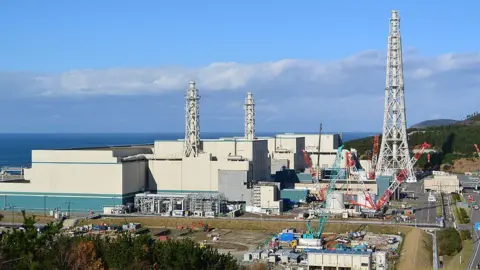
Japan has suspended operations at the world's largest nuclear power plant, the Kashiwazaki-Kariwa, just hours after its restart, according to its operator, Tokyo Electric Power Company (Tepco).
An alarm sounded 'during reactor-start-up procedures,' though Tepco spokesperson Takashi Kobayashi reported that the reactor remained 'stable.' This alarm was triggered at reactor number six, which had restarted on Wednesday after a delay due to a prior malfunction, marking the first reactor to commence operations since the 2011 Fukushima disaster.
The catastrophic event led to the shutdown of all 54 of Japan's reactors following a magnitude 9.0 earthquake, which prompted meltdowns at Fukushima and the evacuation of over 150,000 residents, many of whom have not returned despite declared safety.
In light of the recent alarm, Kobayashi noted that there was 'no radioactive impact outside' the plant. The restart of reactor number six had been initially scheduled for Tuesday but had been postponed due to a technical glitch, with commercial operations planned to begin next month.
While the focus remains on the stability of the restarted reactor, Tepco is currently investigating the cause of the incident and has not provided a timeline for when operations might resume. The seventh reactor at the facility is not expected to be reactivated until 2030, with discussions about the future of other reactors suggesting possible decommissioning, which would significantly reduce the plant's operational capacity.
Safety concerns linger amidst public protests, especially following a decade marked by efforts to revive nuclear power in Japan as a means to achieve net zero emissions by 2050. Historically, nuclear energy provided nearly 30% of Japan's electricity before the Fukushima incident, with a vision to increase this to 50% by 2030. Since 2015, 15 out of 33 operable reactors have been restarted as Japan navigates its energy landscape.
A small crowd protested outside Tepco's headquarters last week, demonstrating the ongoing unease among local residents regarding nuclear safety in the post-Fukushima era.