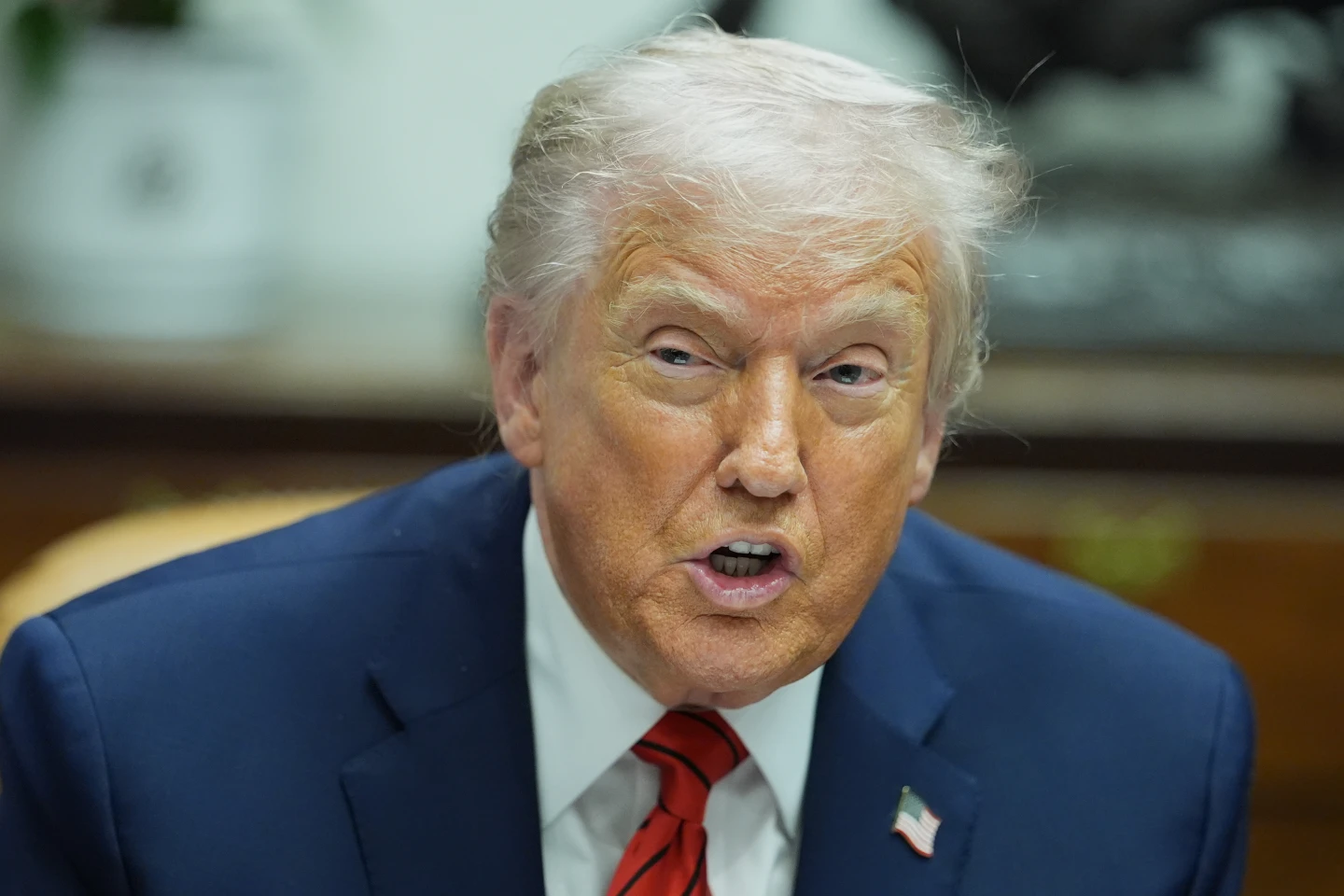
WASHINGTON (AP) — President Donald Trump’s approval ratings on economic management and immigration policies have dropped significantly since March, according to a new AP-NORC poll. These developments signal that the key issues that were pivotal for his election last year are becoming potential liabilities ahead of the 2026 midterm elections.
The poll indicates that merely 31% of U.S. adults approve of Trump’s approach to the economy, a decline from 40% in March, representing his lowest rating on economic management in his first two terms. The Republican president continues to face challenges following backlash over his federal government management and failed attempts at bolstering public confidence post a record-long government shutdown.
Trump's handling of crime has also seen a decline in support, down from 53% in earlier polls to 43%. Similar trends are evident regarding immigration support, which fell from 49% approval in March to 38% now.
As the Republican Party gears up for the upcoming midterms, concerns about Trump's declining approval ratings resonate, especially among his base. Recently, 69% of Republicans reported approval of Trump’s economic management; however, this number has decreased from 78% in March.
Despite these declines, Trump’s overall presidential approval remains at 36%, a minor decrease from 42% earlier this year. This suggests that while dissatisfaction is growing, many voters are still hesitant to fully criticize his leadership.
Poll respondents expressed varied sentiments about Trump’s handling of immigration policies, with some appreciating his efforts on border security, which received a relatively high approval rating of around 50%. Nonetheless, Trump's immigration policies have sparked discontent, with instances of widespread deportation attracting criticism from across political spectrums.
The poll showcases how public confidence in the economy remains low, with many Americans classifying the current economic situation as 'poor', a sentiment unchanged from recent months. The survey's findings reflect a complex picture of Trump's political standing as he heads into an important election cycle, raising questions about his ability to maintain momentum within an increasingly skeptical electorate.