As thousands of Gazans tentatively return home after being displaced for the past 15 months, they are confronted with a staggering reality—a region torn apart by war and lacking fundamental resources. The journey back, whether by foot or vehicle, symbolizes the start of a long and uncertain future for residents of the Gaza Strip, which is merely a fraction in size.
Prominent Gazan journalist Ghada el-Kurd shared her sentiments as she prepared for her own return from Deir el-Balah, expressing grave concerns over the region’s humanitarian crisis: “We have to re-establish again from the beginning, from zero.” As she put it, assessing the dire situation, “There are no facilities, no services, no electricity, no water, no infrastructure.”
Despite the immediate challenges of securing food and shelter being partially addressed—thanks to aid flowing into the region at unprecedented levels, according to Sam Rose from the UN’s Palestinian refugee agency—this wave of assistance may only scratch the surface of what is needed. Rose stated, “We’re able to meet the bare minimums in terms of food, water, blankets, hygiene items. But beyond that, this is a long, long road.”
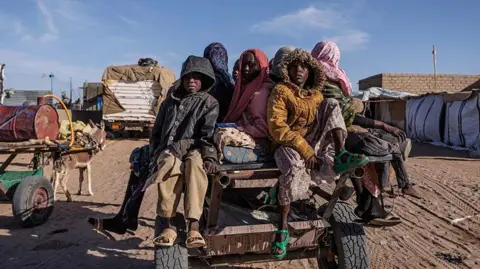
The UN has reported massive destruction throughout the Gaza Strip since October 2023, with around 70% of buildings damaged or destroyed, especially in the north where Jabaliya, a city with a pre-war population of 200,000, has been largely obliterated. The ongoing demand for shelter is critical, and Gaza's Hamas-run Government Media Office urgently called for 135,000 tents and caravans as many residents face an indefinite stay in temporary accommodations.
Compounding the issue is the pressure on existing resources. Residents like Asmaa Tayeh, who remained in the north during the conflict, noted the rising tension as shelters become overcrowded, leading to a new wave of displacement as families return to reclaim homes. “There’s a huge problem… now they have to empty these houses and give them back to their owners,” Tayeh explained.
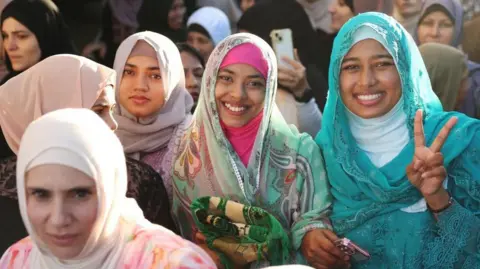
In the wake of increased demand, prices for essential goods are beginning to rise, exacerbating an already dire situation. However, many returning residents express relief and hope, eager to reclaim their lives in familiar neighborhoods. “We are overjoyed to return to the north, where we can finally find comfort,” one returning woman reflected.
Concerning international perspectives, proposals—like that of former President Donald Trump encouraging temporary relocation to Egypt or Jordan—received swift rebuke from officials in those countries, who feared the implications of mass refugee inflow. Israeli officials have shown mixed reactions, with some viewing such proposals as beneficial for settlement expansion in Gaza.
As challenges against rebuilding persist, expert insights warn that if Gazans don’t see immediate improvement in their living conditions, the outflow of residents seeking better opportunities elsewhere may continue. Ghada el-Kurd remarked on the potential repercussions: “If they lost everything and the reconstruction process is delayed, I think people will not stay in Gaza." With the situation still unfolding, the need for comprehensive and agile humanitarian measures has never been more critical for the future of Gaza.