In brief
Myanmar has started its defense at the International Court of Justice, denying allegations of genocide against the Rohingya people. The government claims that The Gambia has not provided sufficient evidence to support their accusations, while a military crackdown in 2017 led to the deaths of thousands and the displacement of over 700,000 Rohingya to Bangladesh. The session includes arguments from both sides about the intent behind military actions and the implications of a court ruling on Myanmar's future.
Myanmar has denied committing genocide against the Rohingya people, stating that The Gambia has failed to provide sufficient proof as it began its defense at the UN's top court.
Ko Ko Hlaing, a representative of Myanmar's government, told judges at the International Court of Justice (ICJ) that the allegations were 'unsubstantiated'.
The Gambia's Foreign Minister, Dawda Jallow, previously told the court that Myanmar intended to erase the minority Muslim population through what he described as 'genocidal policies'.
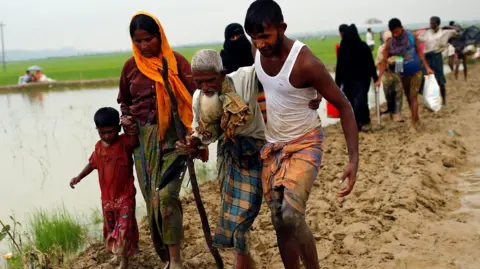
Since a military crackdown in 2017, thousands of Rohingya have died and more than 700,000 have fled to neighboring Bangladesh.
A report from the UN the following year called for investigations into top military figures for genocide in Rakhine state. Myanmar, under military control since a coup in 2021, has consistently rejected such claims, insisting their operations targeted militant threats.
Hlaing argued that Myanmar had no choice but to respond to attacks from insurgents in northern Rakhine state, referring to the military's actions as necessary counter-insurgency operations.
The Gambia launched its case against Myanmar in 2019, asserting a duty born from its own experiences with military governance. Jallow emphasized the extensive persecution of the Rohingya and the ongoing genocidal intent behind the government's policies.
At present, over a million Rohingya live in crowded refugee camps in Bangladesh. Hlaing stated Myanmar's commitment to repatriate individuals from Rakhine State currently residing in these camps, while also acknowledging challenges posed by external factors like the COVID-19 pandemic.
The court proceedings are set to include testimony from Rohingya survivors, with the ruling expected by the end of 2026, potentially setting a precedent for similar cases worldwide regarding genocide.