In brief
The announcement of phase two of Trump's Gaza peace plan may seem like progress, but significant challenges loom. The demand for Hamas to disarm is met with resistance, and unclear governance structures raise concerns. The ongoing humanitarian crisis complicates any potential for stability, putting millions at risk.
On the face of it, the announcement of phase two of President Donald Trump's peace plan for Gaza would seem like progress.
But there remains a huge lack of clarity and detail about the future of the strip and the 2.1 million Palestinians who live there.
Furthermore, there are many pitfalls.
First, Trump's plan demands that Hamas, as well as other groups in Gaza, agree to disarm.
Announcing phase two of the deal, the US Special Envoy to the Middle East, Steve Witkoff, said failure to do so would bring serious consequences. However, Hamas has so far adamantly refused to give up its weapons, which it sees as tools of resistance to Israel's decades-long military occupation.
If it maintains that position, there are already far-right members of Israeli Prime Minister Benjamin Netanyahu's coalition government who are eager to resume the war and finish the job. While massively diminished militarily, US intelligence has long estimated that Hamas has likely recruited more new members in Gaza than have been killed by Israel during the war.
The ceasefire, which has been in place since October last year, is already fragile at best. Both sides have accused each other of repeated violations. More than 450 Palestinians have been killed in Israeli strikes since it came into force, according to the Hamas-run health ministry in Gaza. The Israeli military says three of its soldiers have been killed in attacks by Palestinian armed groups during the same period.
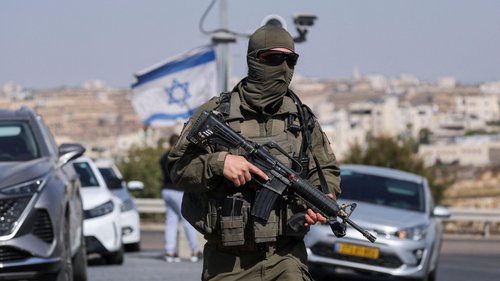
Secondly, there is little clarity over to what extent Israel will be required to withdraw its forces from Gaza. It has given no indication that it is willing to pull back completely, insisting it needs to maintain a strong security presence in Gaza. Officials talk of a new reality in Gaza, insisting that the strip will never revert to the state it was in before Hamas launched its deadly attack on 7 October 2023. Continued wrangling over the extent of Israeli forces' withdrawal is anticipated.
Then there is the issue of governance. Who will run Gaza, if not Hamas, which came to power after winning Palestinian elections almost exactly 20 years ago? Responsibilities such as policing, security, education, and healthcare remain in question.
For more than a year now, the idea of an International Stabilization Force has been proposed as a means of providing security in Gaza. Egypt, Turkey, the UAE, Qatar, and Saudi Arabia, along with the West Bank-based Palestinian Authority, have all been mentioned as potential contributors. However, none have committed, and the details remain vague.
Under Trump's peace plan, Gaza will supposedly have three levels of governance. The lowest level will be managed by a new government of technocrats, composed of figures from civil society within Gaza. Independently, it has been announced that Hamas will have no role in this governance.
Above that, an Executive Committee based outside Gaza is expected to oversee the new government's activities. Rumors suggest that non-Palestinians, including former British prime minister Tony Blair, might take significant roles. Blair, however, is widely distrusted by Palestinians due to his closeness to Israel and involvement in the Iraq War.
At the highest level lies the Board of Peace, claimed to be chaired by Trump himself. Figures such as UK Prime Minister Keir Starmer, Italy's leader Giorgia Meloni, and Turkish President Recep Tayyip Erdogan are rumored to be among its members. Many Palestinians perceive this foreign intervention in Gaza as a form of colonialism.
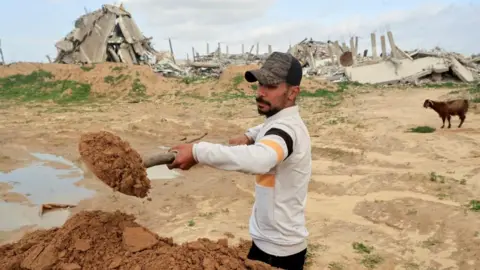
Amid these significant political developments, the humanitarian situation in Gaza remains dire. Since the ceasefire was declared last October, more aid has been permitted into the strip, but agencies insist that it falls far short of the needs. Hundreds of thousands remain homeless, grappling with makeshift tents, as harsh winter conditions exacerbate their plight.
This beleaguered populace has faced torrential rain and high winds, leading to severe flooding and the collapse of structures. Most children have had little to no education for over two years.
While phase two of the peace plan may appear as an advancement, many underlying issues lend themselves to a skepticism about its potential for genuine peace.