In brief
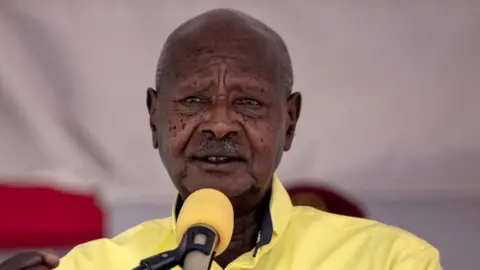
Yoweri Museveni, who has led Uganda for nearly four decades, is pushing for a seventh term in office, causing an uproar among critics who had once supported his rise against oppressive regimes. Now 81, Museveni's tenure has yielded economic growth and stability but has also been marred by allegations of political suppression and the undermining of democratic institutions.
Ugandans under the age of 40 - and that is more than three-quarters of the population - have only known one president.
Yoweri Museveni seized the top job in 1986 following an armed uprising and at the age of 81, he shows no signs of budging.
His time at the helm has been accompanied by a long period of peace and significant development, for which many are grateful. But his critics say he has maintained his grip on power through a mixture of sidelining opponents and compromising independent institutions.
We don't believe in [presidential] term limits, he once told the BBC, secure in his role after winning a fifth election.
A year later, the age limit for a presidential candidate was removed - paving the way, many believe, for Museveni to become president for life.
Museveni's journey began in 1944, when he was born into a family of cattle keepers in Ankole, western Uganda...
He became known for his efforts to recover Uganda from years of violence and instability brought on by successive brutal regimes. Ever since then his leadership has oscillated between commendation for growth and criticism for centralizing power.
The allegations and incidents surrounding his presidency range from the mistreatment of opposition members to controlling the judiciary, prompting questions about the health of Uganda's democracy.
As Museveni ages, worries about a political transition and succession loom large, particularly as his son, Gen Muhoozi Kainerugaba, emerges as a possible successor amid concerns about power consolidation within the Museveni family.
With his seventh term on the horizon, the president asserts confidence in his governance while acknowledging the need for stability amid rising challenges in political dissent and opposition suppression.