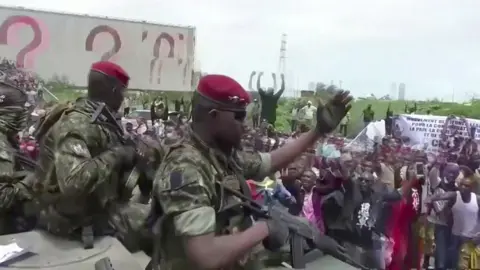
From the moment he seized power in September 2021 Guinea's Mamadi Doumbouya struck an imposing figure.
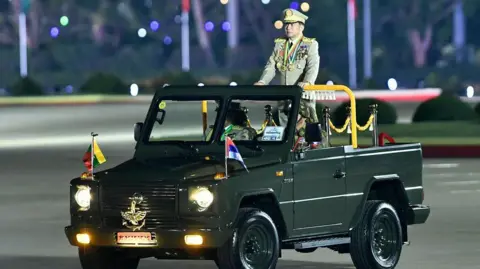
Just 36 years old at the time, the broad-shouldered colonel, standing at well over six feet (1.8m), wearing military fatigues, mirrored sunglasses and a red beret certainly made an impression when announcing the coup.
A relatively unknown member of an elite army unit, he declared that the government of ousted President Alpha Condé had disregarded democratic principles and that citizens' rights were being trampled on.
After more than four years of acting as interim president, and going back on a promise not to run for leadership of the country, Doumbouya, now 41, is set to be sworn in as the elected head of state on Saturday.
The discreet, disciplined and private man won 87% of the vote in December's election against a severely depleted field.
Ex-Prime Minister Cellou Dalein Diallo, now in exile, described the process as a charade which generated fabricated results.
While seemingly enjoying some popular support, critics have questioned Doumbouya's democratic credentials as some political parties have been banned, activists have mysteriously disappeared and media outlets been shut down.
Scrolling back through the social media accounts from the president's office there is a sense of a carefully curated image.
The army man, now a general, has, for the main, ditched the camouflage in favour of the baseball cap and tracksuit, or a boubou - traditional Guinean attire of loose-fitting robes with elaborate embroidery. The shades though are still at times in evidence.
But the donning of civilian clothes may not be entirely sincere, according to some analysts.
Human rights campaigners have demanded to know the whereabouts of two activists - Oumar Sylla (known as Foniké Menguè) and Mamadou Billo Bah – who have not been seen since July 2024. They suspect the men were taken by the military.
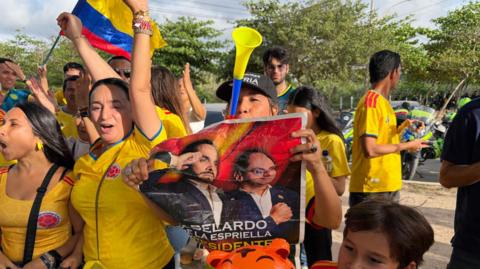
Nevertheless, the 2021 coup was widely welcomed in the country, and since then, Doumbouya appears to have remained a popular figure. Polling organisation Afrobarometer found that between 2022 and 2024 the proportion of people who trusted the president either partially or a lot grew from 46% to 53%.
In his address to the nation a few days into the new year, he struck a conciliatory tone, calling on all Guineans to build a nation of peace and fully assumed sovereignty.
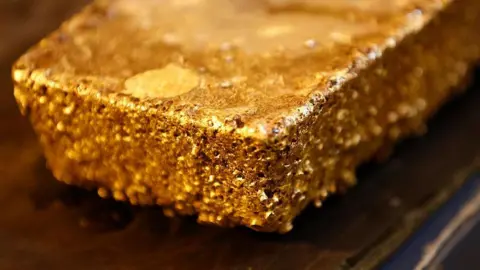
In a country that continues to grapple with high levels of poverty despite plentiful natural resources – including the world's largest reserves of bauxite – this idea strikes a chord. The government’s messaging on the development of the vast iron-ore resources underscores the possible benefits for the people.
The three billion tonnes of ore available in a remote southern part of the country could transform the global iron market, as well as Guinea's fortunes. The authorities say earnings from the project, partly owned by Chinese miners as well as the British-Australian corporation Rio Tinto, will be invested in new transport infrastructure as well as health and education.
The success or otherwise of Simandou may define Doumbouya's presidency.