In brief
Satellite images confirm that Israel has moved its Yellow Line further into Gaza, marking a shift that has left many Palestinians uncertain about their safety and territorial rights. The move, which includes relocating concrete blocks that delineate the military control line, has been accompanied by a surge in defensive measures and violent incidents, raising concerns about the ongoing implications for civilians in the region.
Israel has moved the blocks which are supposed to mark its post-ceasefire line of control deeper into Gaza in several places, sowing confusion among Palestinians.
Satellite images reviewed by BBC Verify show that in at least three areas Israel placed blocks, before returning later and moving the positions further into the Strip.
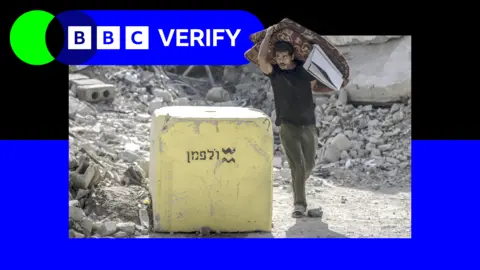
Under the terms of the US-brokered deal with Hamas, Israel agreed to withdraw troops beyond a line marked in yellow on Israeli military maps, which it has illustrated on the ground with concrete yellow blocks.
Defence Minister Israel Katz warned in October that anyone crossing the Yellow Line would be 'met with fire'.
Since these comments were made, there have been a series of deadly incidents around the line.
In Beit Lahia, Jabalia and al-Tuffah, the Israel Defense Forces (IDF) placed blocks and later returned to move them deeper inside Gaza. In total, 16 positions were moved.
In the al-Tuffah neighbourhood of Gaza City, satellite images show that IDF troops moved at least seven already placed blocks between 27 November and 25 December. The position of the markers were moved on average 295m (968ft) deeper inside the Strip.
As well as the blocks that have been moved, BBC Verify mapped 205 other markers. More than half of those have been placed significantly deeper inside the Strip than the line marked on maps. An IDF spokesperson said it rejected 'all claims that the Yellow Line has been moved or its crossing by IDF troops'.
A recent analysis suggests some sections of the Yellow Line remain unmarked on the ground more than three months post ceasefire, leaving civilians uncertain of where a 'dangerous combat zone' begins.
A local resident near Khan Younis described being trapped due to the sudden movement of blocks, expressing fear over the escalating military actions nearby.
Experts suggest that this tactic allows Israel to manage territorial control while keeping legal status ambiguous. Meanwhile, deadly incidents around the Yellow Line continue, raising concerns about civilian safety and human rights in the region.
In a notable incident, IDF actions led to the deaths of civilians at a shelter and involved the military striking near populated areas, leading to public outcry.
As tensions rise, the international community watches closely, eager for developments in the evolving ceasefire agreement.