In brief
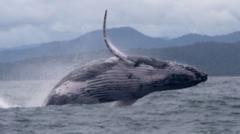
A humpback whale has undertaken a remarkable journey, traveling over 13,000 kilometers from the Pacific coast of Colombia to Zanzibar in the Indian Ocean, which scientists believe may be influenced by climate change. This male whale was first photographed in 2017 off the Colombian coast and later re-sighted near Zanzibar in 2022. Experts describe the migration as one of the longest documented for this species, potentially drawing attention to shifts in food availability or new breeding behaviors resulting from global environmental changes.
Dr. Ekaterina Kalashnikova, part of the Tanzania Cetaceans Program, remarked that this specific whale's migration is "truly impressive and unusual" for an already migratory species like the humpback. While humpbacks typically travel lengthy distances annually between tropical breeding grounds and cooler feeding areas, this whale's journey stands out for linking two distinct breeding locales.One theory suggests that climate change is depleting food sources such as krill, pushing the whale to search further for sustenance. Alternatively, the whale's journey may indicate a search for new reproductive areas as conservation efforts lead to population rebounds.Despite not knowing the definitive reasons for this remarkable migration, multiple factors are proposed, including widespread climate variations, more frequent extreme environmental events, and the natural evolution of the species. Researchers utilized data collected through citizen science platforms, with photos submitted by whale enthusiasts aiding in tracking whale movements using artificial intelligence.The findings appear in the journal "Royal Society Open Science," establishing a connection between changing climatic conditions and animal behaviors in the ocean. Through these studies, the understanding of how climate change is influencing not just these magnificent animals but also the ecosystems they inhabit continues to grow, as observed in this extraordinary migratory event.