In brief
Over two months, Canadian military personnel undertook a challenging mission across 5,200 km of the Arctic. This operation was not only a demonstration of military presence but also aimed to enhance survival and navigation skills in the face of dangerous weather and geopolitical competition.
A simple row of spruce trees marked the finish line for Canadian army reservists and combat members after a marathon two months pushing through one of the harshest environments on Earth: Canada's vast Arctic.
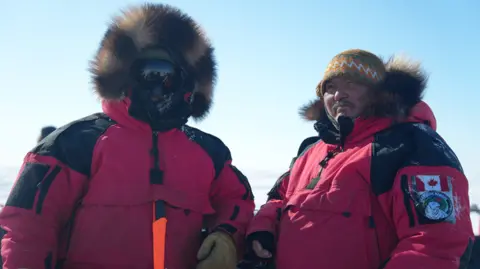
The patrol, which ended on Friday in Churchill, Manitoba, was the largest northern mission in the history of the Canadian Rangers - a branch of the Canadian Armed Forces responsible for monitoring the country's remote regions. For 5,200km (3,200 miles), they moved across the Arctic, following a route that had not been attempted in 80 years.
They drove snowmobiles across ice-covered terrain, navigating blizzards and high winds as they travelled for hours between remote northern communities. Some nights, they camped on the ice in tents as temperatures plunged to -60C (-76F).
On the final night, on the frozen shores of the Hudson Bay, they set up camp next to an abandoned trading post as the ice crackled beneath them while the northern lights danced above.
Hazards included polar bears, frostbite, and cold-weather dehydration. Yet, this year's operation, which ran from mid-February to early April, involved 1,300 military personnel aiming to survey the land, learn more about climate change, unlock new travel passageways, and test survival and warfare capabilities.
The mission's relevance has grown amid a geopolitical scramble for Arctic resources as the climate warms, especially following US threats regarding Greenland, which has heightened tensions among NATO allies.
Despite these tensions, Brig Gen Daniel Rivière noted that Trump's remarks have had zero effect on cooperation among Canadian forces and their allies.
The Canadian Armed Forces have also leveraged the expertise of Indigenous Inuit members, vital for tracking safe routes and ensuring survival in these extreme conditions.
Throughout the mission, military personnel shared traditional food sources and survival knowledge and were supported by aerial surveillance to survey terrain and test new technologies.
Reflecting on the successful completion of the mission, Chief Warrant Officer Sonia Lizotte noted, We have tested the limits, and we can now see the future. Meanwhile, Canada's focus on Arctic sovereignty solidifies as the government commits to investing in the northern territories, marking a shift in national security priorities.