In brief
West Bengal is facing a political crisis as nine million voters have been removed from the electoral rolls ahead of this month's state elections. This move is part of the Special Intensive Revision process, which aims to cleanse the voter list but has raised significant concerns about disenfranchisement and legal challenges. Among those excluded are many Muslims, leading to accusations of targeting by the ruling party. Legal disputes remain unresolved with elections looming on April 23 and 29.
Muhammad Daud Ali, a former Indian army technician, recently discovered that he was no longer a voter in his home state of West Bengal.
His name - and those of his three children - had been struck off the electoral rolls despite valid documents, including his passport and service records. Only his wife remained on the list.
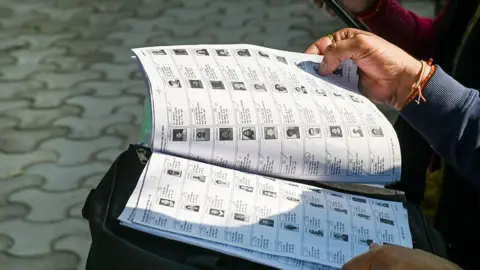
Ali, 65, and his children are among nine million voters - about 12% of West Bengal's 76 million electorate - who have been removed from the 2026 rolls as part of the Special Intensive Revision (SIR) exercise. Voting to elect a new state government will take place later this month in this eastern Indian state.
Of these nine million, more than six million names were struck off as absentee or deceased voters, while the fate of another 2.7 million - including families like Ali's - remains undecided and will be determined by tribunals.
Thirteen states and federally-administered territories have undergone the SIR process so far, but West Bengal is the only one where it was followed by an additional layer of special adjudication.
India's Election Commission says the revision is meant to weed out duplicate or outdated entries and add genuine voters. But the exercise has been mired in controversy and faced legal challenges ever since it was first held in the state of Bihar last year.
It has become particularly contentious in West Bengal, where the ruling Trinamool Congress party (TMC) is locked in a bitter standoff with the poll body.
Gyanesh Kumar, the chief election commissioner, has said the revision exercise's aim is to ensure a pure electoral roll with no eligible voters excluded and no ineligible persons included.
The tensions have been fueled by remarks from political leaders, including from Prime Minister Narendra Modi, who have suggested in campaign speeches that the clean-up is aimed at identifying so-called illegal Bangladeshi infiltrators - a term the TMC says is being used to refer to Muslims. However, many Hindu voters have also been left out from the list.
India shares a 4,096km (2,545-mile) largely porous and partly riverine border with Bangladesh and a significant stretch of it runs through West Bengal. This has added a fraught political edge to debates over migration and voter rolls in the state.
West Bengal is also home to India's second-largest Muslim population, accounting for roughly 14% of the country's 172 million Muslims, according to the 2011 census.
Home to more than 70 million voters, the state has been governed by Chief Minister Mamata Banerjee's TMC since 2011, with Modi's Bharatiya Janata Party (BJP) as its main challenger.
Banerjee's party alleges the roll revision exercise has disenfranchised millions - particularly Muslims - to benefit the BJP, a charge both the party and the Election Commission deny.
After repeated legal challenges, the Supreme Court allowed the Election Commission to proceed with the April polls without settling all disputes over the deletions. As a result, the fate of 2.7 million voters remains undecided.
Constituency-wide data compiled by political parties suggests that around 65% of the 2.7 million in limbo are Muslims. Overall, Muslims account for 3.11 million - about 34% - of the nine million removed, significantly higher than their 27% share in West Bengal's population, according to the 2011 census.
Ali and his children must now approach a tribunal set up on the Supreme Court's direction. But with the rolls frozen and elections due later this month - on 23 and 29 April - they see little chance of restoring their voting rights in time.
I am dumbstruck. I feel deeply hurt and insulted. How can they conduct the elections without solving our disputes? I simply have no idea who to seek justice from, Ali told the BBC.
Political scientist Sibaji Pratim Basu remarked, There is no example of an election happening in India with voters' rights remaining suspended. Leaving out 2.7 million voters is such an absurd proposition. This is a shame for democracy.
Federal minister Sukanta Majumdar, a BJP leader from the state, defended the revision, stating, The constitution says only Indian citizens can choose prime ministers and chief ministers. Therefore, purging non-citizens was important.
The deletion of such a large number of names has sharpened concerns over errors, exclusion risks and the criteria used to determine valid voters. In the state capital, Kolkata, nearly 29.6% of voters were struck off the rolls in the north and 27.5% in the south - among the highest rates in the state.
The impact of the overall revision has been uneven, with sharp cuts in some urban pockets in the state, particularly in border districts with Bangladesh where most exclusions occurred under the logical discrepancy category. These areas have become the epicenter of the controversy, where many exclusions were seen in the final phase of the exercise.
The ongoing court case reflects the deep divisions over the role of identity and legality in determining voter eligibility in a state marred by longstanding socio-political tensions, indicative of the larger trends in nation-wide electoral politics.