When Donald Trump strode on to a stage at a campaign rally in Indiana in 2016, he made one thing clear: China was America's chief economic antagonist. We can't continue to allow China to rape our country, he declared to his supporters. The anti-China rhetoric didn't let up - through a decade of rallies, his 2024 campaign and into his second term.
Having returned to the White House, Trump was accompanied by key allies known for their strong anti-China views, all accusing Beijing of economic collusion and drug imports. In response to China's actions, Trump had instituted tariffs, which soon escalated into a trade war.
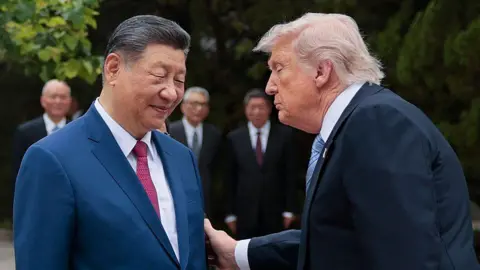
However, during his recent visit to Beijing, Trump appeared markedly more cordial. He was welcomed with fanfare at the Great Hall of the People, where he told President Xi Jinping, It's an honor to be your friend, and the relationship between China and the US is going to be better than ever before.
Despite the joviality, substantive outcomes were limited. Trump mentioned fantastic trade deals without any major breakthroughs. The visit did see limited agreements, such as allowing Nvidia to sell semiconductors to Chinese businesses.
Yet, the underlying tensions remained palpable, particularly concerning Taiwan. Trump's ambiguous comments about a significant upcoming arms sale to Taiwan frustrated some observers within the MAGA movement. Former Trump aide Steve Bannon expressed shock at Xi's firm stance on the issue during their discussions.
Interestingly, the aftermath of Trump's trip saw a muted response from his staunchest allies, which may imply a shift in messaging or a recognition of ongoing complexities in US-China relations. Experts suggest that Trump's friendlier tone could indicate an acknowledgment that prior hardline tactics had not yielded results. The ongoing pressures centering on Taiwan, especially with the White House prepare for Xi's expected visit in September, loom large over any future dealings.
Having returned to the White House, Trump was accompanied by key allies known for their strong anti-China views, all accusing Beijing of economic collusion and drug imports. In response to China's actions, Trump had instituted tariffs, which soon escalated into a trade war.
However, during his recent visit to Beijing, Trump appeared markedly more cordial. He was welcomed with fanfare at the Great Hall of the People, where he told President Xi Jinping, It's an honor to be your friend, and the relationship between China and the US is going to be better than ever before.
Despite the joviality, substantive outcomes were limited. Trump mentioned fantastic trade deals without any major breakthroughs. The visit did see limited agreements, such as allowing Nvidia to sell semiconductors to Chinese businesses.
Yet, the underlying tensions remained palpable, particularly concerning Taiwan. Trump's ambiguous comments about a significant upcoming arms sale to Taiwan frustrated some observers within the MAGA movement. Former Trump aide Steve Bannon expressed shock at Xi's firm stance on the issue during their discussions.
Interestingly, the aftermath of Trump's trip saw a muted response from his staunchest allies, which may imply a shift in messaging or a recognition of ongoing complexities in US-China relations. Experts suggest that Trump's friendlier tone could indicate an acknowledgment that prior hardline tactics had not yielded results. The ongoing pressures centering on Taiwan, especially with the White House prepare for Xi's expected visit in September, loom large over any future dealings.