India is grappling with a significant legal and societal dilemma as its Supreme Court hears petitions that challenge the long-standing Places of Worship (Special Provisions) Act of 1991. This law was established to preserve the character of religious sites as they existed at the time of India's independence in August 1947, aiming to prevent the conversion or alteration of any place of worship. Notably, the law has exemptions, such as the infamous Babri Masjid case, which has been a focal point of conflict between Hindus and Muslims since the mosque's demolition by a Hindu mob in 1992.
The current legal discourse includes grievances from members of Prime Minister Narendra Modi's Bharatiya Janata Party (BJP), who argue that the 1991 law infringes upon religious freedom and constitutional secularism. The court's evaluations come amid rising tensions, with Hindu nationalists contesting the status of multiple mosques, alleging that these religious sites were built atop demolished Hindu temples. Critics, including Muslim leaders and opposition voices, contend that rescinding the law would unleash a cascade of legal challenges and further exacerbate communal discord, particularly between Hindu and Muslim communities.
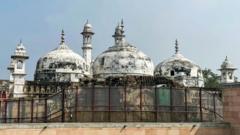
Recently, the Supreme Court moved to pause any new court cases concerning the ownership of religious structures until further notice. This ruling follows increased scrutiny of several disputes, including Gyanvapi and Shahi Eidgah mosques in Varanasi and Mathura, and a court case in Rajasthan aiming to reclassify the Ajmer Sharif shrine as a former temple site.
The Places of Worship law was instituted at a time when Hindu nationalist sentiment was rising sharply, particularly with regards to ambitions to build a temple at the Ayodhya site where the Babri mosque once stood. The introduction of the law was fueled by fears of escalating violence, following numerous riots that claimed lives in the late 20th century. During parliamentary discussions, the original intent was to foster religious tolerance and protect minority worship sites from potential upheaval.
As the Supreme Court's decisions unfold, the focus remains squarely on the implications for historical narratives and the contentious claim processes surrounding revered sites. Analysts argue that the court's examination may set dangerous precedents that kindle the already volatile inter-religious climate in the country. Furthermore, legal experts recognize the challenges in ascertaining definitive historical claims amidst the emotionally charged backdrop of India's religious landscape.
With the court's cautious approach to restrain immediate legal action, the status of the 1991 law will be pivotal in shaping India's future concerning communal harmony and religious identity. The next hearing on this matter is scheduled for February, making the upcoming months crucial for a nation at a crossroads of faith and politics.