In brief
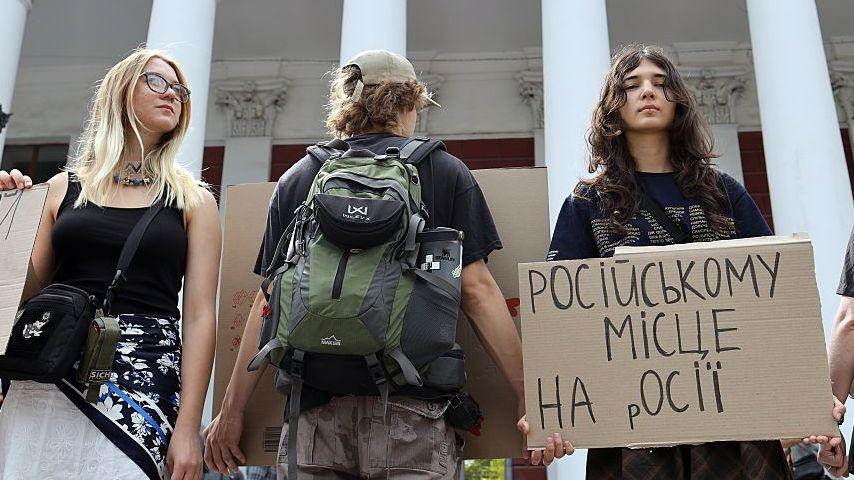
Odesa’s council is set to vote this week on a proposal that would prohibit Russian‑language books, music and speeches in public venues, deepening a national debate about language and identity after Russia’s 2022 invasion. Local activists and city officials argue the ban could serve as a step toward “decolonising” the city’s Soviet legacy while others warn it risks marginalising the city’s Russian‑speaking majority. Figures such as lawyer Artem Kartashov and actor Borys Barsky voiced opposing views – one labeling Russian as a weapon, the other asserting cultural heritage lies beyond politics. The move follows similar restrictions enacted in Kyiv and reflects the broader push to make Ukrainian the sole state language, while still allowing private use of Russian. The debate underscores Odesa’s unique linguistic landscape, with many residents speaking a mixture of Ukrainian and Russian, or surzhyk, and highlights the tension between national unity and local cultural identity.
Odesa, Ukraine’s third‑largest city on the Black Sea, is set to decide this week whether to place a ban on Russian‑language cultural content in public venues.
The proposal expands current national rules that limit Russian use in government, education and official communications. It would specifically stop the public sale and playing of Russian‑language books, music and speeches in streets, parks, state‑run theatres and other institutions.
For many Odesans, Russian is the first language. The city’s debate brings to the fore questions of identity, patriotism and the role of language in a country that is still defending its sovereignty.
Lawyer Artem Kartashov said “Russian is a weapon of influence.” He argues that Russian‑speaking media can undermine Ukrainian identity. In contrast, actor Borys Barsky warned that banning Russian would only benefit the Kremlin and that writers like Dostoyevsky and Bulgakov are part of a shared cultural heritage.
Opposition to the ban comes from a group of councillors who view the move as heavy‑handed. They argue the proposal could turn Odesa, historically a cosmopolitan port, into a second‑class community for its Russian‑speaking residents.
Nationally, a 2022 poll reported 80% support for Ukrainian dominance in media, yet a 2024 poll by Ukrainian students found many still prefer Russian in their day‑to‑day life. The ongoing debate reflects the complexity of language politics in wartime Ukraine.
Officials say a ban would apply chiefly to public spaces, leaving private gatherings like birthday parties untouched. City ombudswoman Anna Nerush cautioned that while the law may not enforce fines, it would pressure businesses to comply and could affect how people feel in everyday life.
Opponents fear that forcing a shift could hurt Odesa’s cultural vibrancy and loyalty, while supporters say it underscores Ukraine’s right to protect its sovereignty. The forthcoming council vote will set an important precedent for future language policy in the country.