In brief
A month after tens of thousands of migrants entered Ceuta, the city has seen a surge of violence as locals, migrants and security forces clash. Protesters have set fire to camps and blocked aid deliveries, while police and the army have been drawn into confrontations. The Spanish government has responded with apologies and policy proposals, but local authorities and opposition parties accuse each other of inflaming tensions. The crisis also raises questions about Spain’s migrant policies and the political status of its northern African territories.
A month after a tidal wave of migrants crossed from Morocco into Ceuta, the Spanish exclave on North Africa’s coast is witnessing a dramatic spike in violence. Local residents, fearing a strain on public services, say they feel unsafe, while activists argue that the government must act swiftly to protect refugees.
On July 30 and 31, at least 72,000 migrants crossed a border fence, with estimates that 100 people died during the mass crossing. While most fled back to Morocco, thousands—including a large number of children—remain on the beaches or in makeshift shelters.
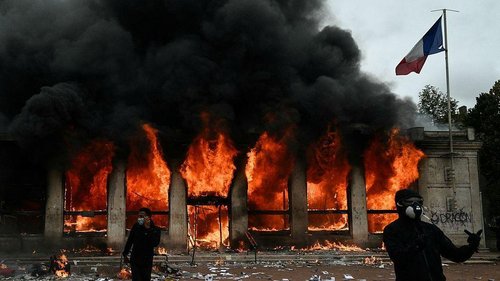
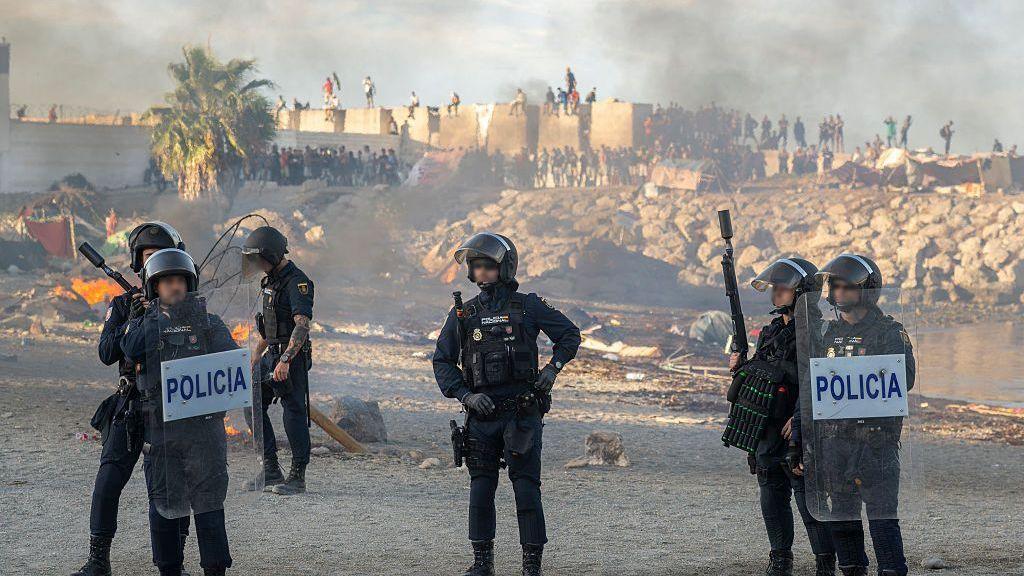
What began as largely peaceful anti‑migrant demonstrations has turned into a volatile conflict. On Thursday, several dozen locals blocked Red Cross volunteers from delivering food and water and then set flares to burn the camps on Trampolín beach. Police forces were hauled into skirmishes with protestors.
The violence came after the arrest of 12 migrants who allegedly threw stones at a military vehicle, breaking windows and injuring four men on board. That morning, police also jostled with vigilante groups that chased migrants through the streets.
The mayor of Ceuta, conservative Juan Jesús Vivas, argues that the city is under pressure but still deserves “normality” and “the dignity of Spain”. He criticized the Socialist government for treating the arrivals as “victims” when he believes “we, the people of Ceuta”, are the true victims.
Pedro Sánchez’s government has called for calm, denouncing anti‑immigrant rhetoric and demanding a responsible approach to immigration. The Interior Minister warned that stigmatisation fuels social division.
The government is also contemplating relocating migrants into public buildings such as sports centres to process legal status and return those who are not eligible for asylum. Local leaders reject this, fearing closer proximity to residential areas could heighten tensions.
Questions remain over who orchestrated the mass crossing. While left-wing politicians accuse Morocco of political maneuvering, the Socialist Party attributes it to human traffickers and lauds Rabat for helping return most of the arrivals.
Ceuta’s sovereignty, and that of neighbouring Melilla, is now spotlighted. Morocco has repeatedly claimed the territories, but Spain’s Foreign Minister José Manuel Albares sharply rejected any suggestion that the city’s integrity could be contested by neighbouring countries.
The crisis underscores the urgent need for a clear, humane, and politically balanced management of migration at Spain’s frontiers. Local politicians, civil society and the nation’s top leaders are scrambling to address the immediate humanitarian needs while preventing the situation from spiralling further.