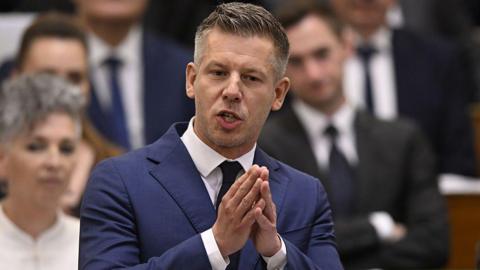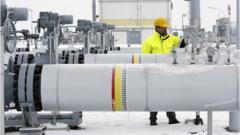
The European Commission has unveiled an ambitious "roadmap" aimed at severing European nations' dependence on Russian energy by the end of 2027. The strategy will prohibit all imports of Russian gas and liquefied natural gas across EU member states. "We will no longer allow Russia to weaponize energy against us... We refuse to indirectly fund the Kremlin's military endeavors," stated European Commissioner for Energy, Dan Jorgensen, during a press conference in Strasbourg on Tuesday.
In response, Kremlin spokesperson Dmitry Peskov criticized the initiative, asserting that Europe could be harming its own interests. The call to cut ties with Russian energy sources intensified following Russia’s full-scale invasion of Ukraine in 2022. As part of this strategic plan, legislative proposals will be presented in June, requiring all EU countries to develop "national plans" to terminate imports of Russian gas, nuclear fuel, and oil by the stipulated deadline.
Jorgensen highlighted the need for EU nations to detail their strategies to replace Russian oil imports while also addressing reliance on uranium and other nuclear materials sourced from the country. The EU aims to decrease its reliance on Russian energy through initiatives such as enhancing energy efficiency, launching renewable energy projects, and diversifying energy supplies.
Despite making significant strides, the bloc still imports notable quantities of energy from Russia. Reports indicate a drop in EU gas imports from 45% in 2021 to 19% in 2024, while Russian oil imports have plummeted from 27% at the beginning of 2022 to merely 3% today. The report warns of economic risks associated with remaining dependent on Russian nuclear resources, as over 14% of the EU's uranium is sourced from Russia in 2024.
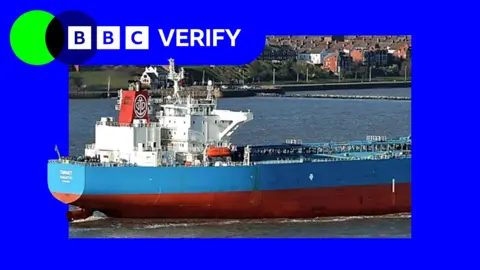
"We've made considerable progress, but there's still more to accomplish," Jorgensen remarked during the press briefing, emphasizing that the transition away from Russian energy must be gradual to mitigate the economic repercussions for the EU. This roadmap also targets Russia's utilization of "shadow fleets"—oil tankers with uncertain ownership and insurance—used to evade sanctions and sustain oil exports.
In response, Kremlin spokesperson Dmitry Peskov criticized the initiative, asserting that Europe could be harming its own interests. The call to cut ties with Russian energy sources intensified following Russia’s full-scale invasion of Ukraine in 2022. As part of this strategic plan, legislative proposals will be presented in June, requiring all EU countries to develop "national plans" to terminate imports of Russian gas, nuclear fuel, and oil by the stipulated deadline.
Jorgensen highlighted the need for EU nations to detail their strategies to replace Russian oil imports while also addressing reliance on uranium and other nuclear materials sourced from the country. The EU aims to decrease its reliance on Russian energy through initiatives such as enhancing energy efficiency, launching renewable energy projects, and diversifying energy supplies.
Despite making significant strides, the bloc still imports notable quantities of energy from Russia. Reports indicate a drop in EU gas imports from 45% in 2021 to 19% in 2024, while Russian oil imports have plummeted from 27% at the beginning of 2022 to merely 3% today. The report warns of economic risks associated with remaining dependent on Russian nuclear resources, as over 14% of the EU's uranium is sourced from Russia in 2024.
"We've made considerable progress, but there's still more to accomplish," Jorgensen remarked during the press briefing, emphasizing that the transition away from Russian energy must be gradual to mitigate the economic repercussions for the EU. This roadmap also targets Russia's utilization of "shadow fleets"—oil tankers with uncertain ownership and insurance—used to evade sanctions and sustain oil exports.