In brief
In the al‑Bustan area of Silwan, Israeli forces have demolished nearly 60 properties since late 2023, leaving many Palestinians homeless and restless. Home‑owner Fayez Awad, who has seen his house torn down, says the demolitions erase any sense of a future for his family and the wider community. The demolition spree is part of a broader plan to transform the area into a biblical‑themed park, a move that critics say fuels settlement expansion and violates international law. Palestinian families are forced to petition courts and risk eviction, while Israel justifies the actions as necessary for public space and security. The situation has drawn international condemnation, with the EU calling the actions dire for a city that should be shared by Israelis and Palestinians.
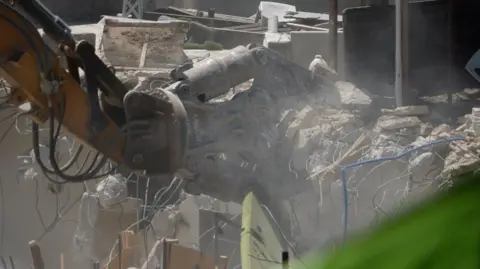
From a hillside overlooking the walled Old City, a rumble of bulldozers echoes as Israeli forces tear into houses in the al‑Bustan part of Silwan. Seventy‑five homes have been gutted or destroyed in the past year, leaving residents wary of a future that may no longer exist in their own neighbourhood.
“There is no future. They destroyed the future and everything else,” says 58‑year‑old Fayez Awad, who now sits on the only remaining floor of his home. The old walls, once a home for generations, are reduced to rubble.
For two decades, the Jerusalem Municipality has maintained plans to convert al‑Bustan into a biblical‑themed park for Israeli settlers, a project that sees the area turned into a ‘King’s Garden’ managed by a Jewish settler group. The bulldozers have accelerated, issuing demolition orders that overlook the narrow streets of an area steeped in history and faith.
Palestinian families point to how construction permits practically cannot be issued in east Jerusalem, and their attempts to negotiate alternative planning have been dismissed. The cost of demolition fines, often tens of thousands of dollars, prompts some to take the law into their own hands, hammering the walls themselves to avoid eviction.
An Israeli court has ruled that the Basha family of the historic yeshiva in the old city must leave, a decision that the district court has temporarily halted while it considers an appeal. The Basha family’s fight is emblematic of the larger struggle between rights to property and the push for new settlements.
The EU recently called the situation in Jerusalem “dire” and condemned Israel’s settlement policy as a violation of international law. Yet the Israeli government has advanced projects for an ultra‑orthodox yeshiva in Sheikh Jarrah and the seizure of Palestinian‑owned properties near the Al‑Aqsa compound, underscoring the willingness to erase Palestinian presence in the city.