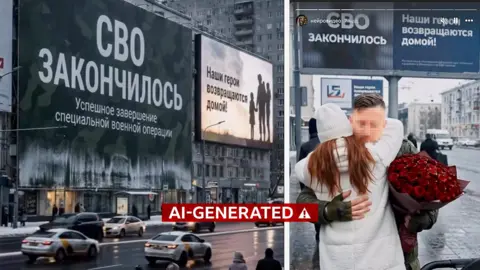
On a snow‑tipped Moscow street, billboards declared the special military operation over and hailed "our heroes" – a message that slid into the hearts of households left behind. Families, grappling with the loss of loved ones in the war in Ukraine, have begun turning to generative AI to create videos that seem to resurrect those deceased soldiers. The footage circulates on Instagram and TikTok, sometimes depicting a soldier’s arm wrapping around a spouse, then ascending a celestial staircase amid angelic glow.
The brief 15‑second clips, often produced by creators such as the well‑known blogger Katya Jin, follow a formula: a uniformed figure meets family, walks forward, and fades into blue skies. Most AI videos omit the brutal realities of the war – the destruction, casualties, and the geopolitical fallout – focusing instead on a sanitized narrative of heroism. The practice has gained traction, especially among parents who seek a sense of closure and find comfort in pretending their dead lover or child still exists.
The trend is not without controversy. Ukrainian observers see these depictions as propaganda‑laden and disrespectful, urging Russians to “stop showing your heroes who earned blood money by killing our children.” Meanwhile, social‑media forums are polarized: some users soaked in tears, others condemn it as “cash in on grief.” The creators themselves report high earnings – up to 200,000 roubles (about £2,000) per month – while the quality of the outputs can vary dramatically.
Academic experts express caution. Katarzyna Nowaczyk‑Basińska from Cambridge notes that posthumous avatars are part of a larger digital‑afterlife industry now amplified by war. She questions whether these visualizations truly help families cope or simply deepen their trauma, cautioning that the political context makes such content ethically complex. Anecdotal evidence from grieving users mirrors this ambivalence: one woman bought an AI portrait for a headstone, finding it “only an illusion,” while another reported that AI images felt oddly comforting, making her feel connected to her late husband.
With the scarcity of reliable casualty data, the narrative that at least 225,000 Russian soldiers have died remains contested – the actual toll is believed far higher. As demand for AI soldier videos climbs, the ethical, psychological, and factual implications become increasingly dire, prompting a global conversation about the role of technology in grieving societies amid conflict.