In brief
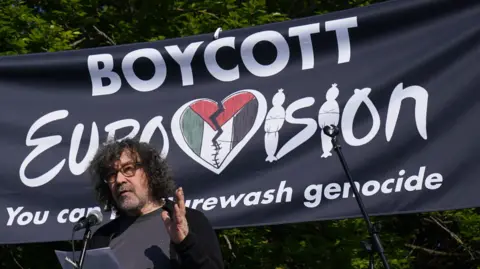
Ireland, renowned for its Eurovision legacy, is boycotting this year's contest alongside four other nations due to the European Broadcasting Union's decision to allow Israel to participate amid ongoing conflicts. This boycott reflects Ireland's stance on the situation in Gaza and has sparked discussions about cultural implications in the face of political unrest.
From Johnny Logan and Dana to years of dominance in the early 1990s, Ireland has a storied history with the Eurovision Song Contest. Ordinarily the country, which holds the joint record for most wins with Sweden, would join the rest of Europe in eagerly awaiting Saturday's grand final. But not this year.
Ireland is one of five countries, alongside Iceland, the Netherlands, Slovenia, and Spain, boycotting the contest over the decision of the European Broadcasting Union (EBU) to allow Israel to participate. This year, there will be no Irish entrant, and national broadcaster RTÉ will not be airing the event from Austria, instead showing a Eurovision-themed episode of the sitcom Father Ted.
This boycott is part of a larger narrative wherein Ireland has been increasingly at odds with Israel regarding the ongoing conflict in Gaza, positioning itself as one of the most pro-Palestine countries in Europe. Israeli broadcaster Kan has called the absence of Ireland and the other boycotting countries a cultural boycott that undermines creative freedom.
Why is Ireland part of a Eurovision boycott?
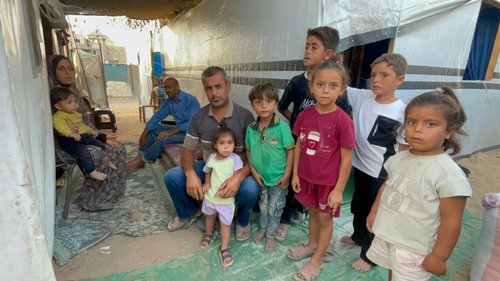
Israel's presence at Eurovision has been contentious since the resumption of its war in Gaza after Hamas's attack on October 7, 2023, which resulted in substantial casualties and hostages. Recent statistics reveal that ongoing Israeli offensives have led to high casualties among Palestinian civilians.
The situation surrounding Eurovision is not unique; it mirrors a cultural and political rift over Israel's actions. The perceived need for the boycott reflects wider sentiments in Irish society regarding solidarity with Palestinians and opposition to the Israeli government's actions.
With the boycott, Ireland's RTÉ articulated the ethical implications of participating in an event while humanitarian crises unfold, and Taoiseach Micheál Martin underscored the action as a show of solidarity with journalists who have suffered violence in Gaza.
Critics like former government minister Alan Shatter claim that RTÉ's decision is morally evocative, sparking discussions on whether the network is responding to undue pressure. Meanwhile, those on the streets of Dublin expressed a mixture of sentiment ranging from support for the boycott to self-reflection on Ireland'spolitics regarding Israel.
What do those on the streets of Dublin think?
Many young people in Dublin have voiced their support for the boycott. They emphasize the need for solidarity with the Palestinian cause and reflect on the larger implications of participating in events that might inadvertently endorse the actions of Israel.
As the Eurovision drama unfolds, side discussions are provoked about Ireland's relationship with Israel and how this extends beyond the confines of musical competitions into the heart of political activism and cultural responsibility.