In brief
Jeremy Bowen discusses the current unrest in Iran, highlighting the government's gradual decline but noting its continued stability due to loyal security forces. As protests erupt amid economic hardship and foreign sanctions, Bowen evaluates historical parallels that suggest a sudden collapse is not yet imminent.
How does an authoritarian regime die? As Ernest Hemingway famously said about going broke – gradually then suddenly.
The protesters in Iran and their supporters abroad were hoping that the Islamic regime in Tehran was at the suddenly stage. However, if it is dying, it is still at the gradual stage.
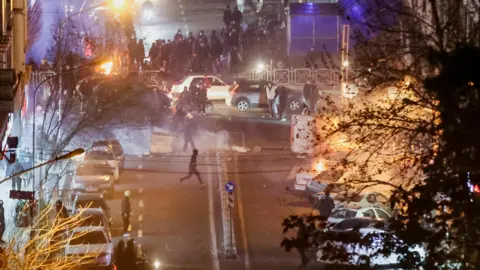
The last two weeks of unrest represent a significant crisis for the regime. Iranian anger has erupted onto the streets before, but this latest explosion comes after the military blows inflicted on Iran by the US and Israel over the last two years.
For many hard-pressed Iranians struggling to feed their families, the economic impact of sanctions has been more significant. The reimposition of all UN sanctions in September left over from the defunct 2015 nuclear deal has left the economy in tatters with food price inflation exceeding 70% and the rial reaching a historic low.
Under immense pressure, it would be easy to assume the Iranian regime is near its end. Yet the evidence suggests that it's not about to perish. Crucially, the security forces remain loyal to the regime, having been meticulously trained and equipped for coercion and repression since the Islamic revolution of 1979.
In recent protests, security forces have shot at their fellow citizens, resulting in a suppression of demonstrations despite the significant unrest in the streets. At the forefront is the Iranian Revolutionary Guards Corps (IRGC), tasked with defending the ideology and system laid out in the 1979 revolution. The IRGC operates as a powerful parallel force to Iran's conventional military and is heavily involved in the economy.
The resilience of these forces does not equate to complacency for the regime's leadership. With external pressures from US President Donald Trump and internal frustrations among the populace, the Iranian government looks for strategies to alleviate these pressures. This includes bellicose rhetoric combined with talks for potential negotiations with the US.
Historical parallels can be drawn from past regimes, such as the Syrian government and Tunisia's leadership, both of which fell under relatively sudden circumstances after long-gestating unrest. As of now, Iran continues to hold its ground, but the situation remains precarious as opponents of the government hope for more support and clearer leadership.