In brief
As Greenlanders anticipate an important summit in Washington involving US officials and their foreign counterparts, concerns are mounting about the future of their territory amidst threats from the U.S. administration. In Nuuk, locals voice their desire for sovereignty and independence, rejecting the notion of being 'for sale' as the U.S. administration aims to solidify its control in the Arctic region amid geopolitical rivalries.
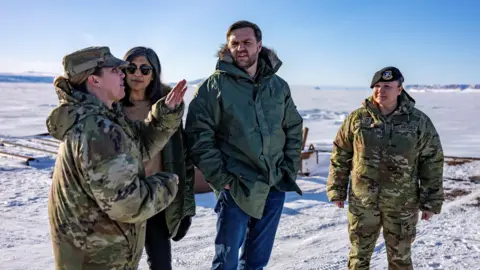
It's crunch time. The US Vice President, JD Vance, is hosting the Danish and Greenlandic foreign ministers, as well as their US counterpart, Marco Rubio, in the White House on Wednesday. The focus of the talks: the future of the world's biggest island, Greenland.There is a large digital news ticker tape running above the snow-covered shopping mall in the island's capital, Nuuk. You don't have to speak Greenlandic to understand the words Trump, Greenland and sovereignty that appear over and over again, in stark red letters.Donald Trump says he wants this country and he'll take it the easy way or the hard way. After his recent controversial military action in Venezuela, people in Greenland are taking him at his word.The anxious countdown to the Washington meeting has been going on for days. Passers-by tell me it feels like years.I would like to encourage (Donald Trump) to use both his ears wisely, to listen more and to speak less. We are not for sale. Our country is not for sale, Amelie Zeeb said, emphasizing her point with traditional sealskin mittens.My hope is for our country to be independent and well-managed and not be bought, added Inuit writer and musician, Sivnîssoq Rask. While Maria, with her seven-week-old baby, expressed worries for her family's future amid the growing international interest.The tussle over Greenland pits NATO nations Denmark and the US against each other. Greenland is a semi-autonomous territory of Denmark, but its strategic location makes it a focal point for military interests. Danish Prime Minister Mette Frederiksen has warned that any forcible US control would end the transatlantic defence alliance.The potential ramifications are substantial. Both the UK and Germany are contemplating strengthening NATO's presence in the Arctic as concerns grow regarding threats from Russia and China. The discussions have included potential troop deployments and an enhanced military presence in the region, reflecting the island's critical strategic importance.Despite the looming geopolitical crisis, Greenland's Prime Minister Jens-Frederik Nielsen reiterated a preference for Danish partnership over American control, ahead of a meeting that could alter the future of Greenlanders and their rights over their territory amidst an unpredictable political landscape.