In brief
The investigation into the fatal shooting of Renee Good by an ICE agent in Minneapolis is poised to unravel a politically charged situation, as multiple narratives clash regarding the justification of the use of force. Video evidence, conflicting statements from officials, and the scrutiny of federal policies on deadly force will play pivotal roles in determining the facts surrounding the incident. This complex case illustrates broader issues of policing and immigration enforcement in America.
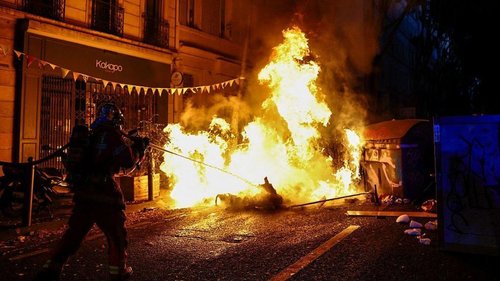
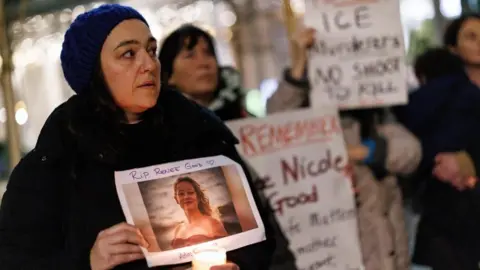
US investigators will face a host of thorny questions in determining whether the fatal shooting of a woman by a federal agent in Minneapolis last week was justified, as local and national officials recount drastically different accounts of an incident that sparked nationwide protests.
Several videos have emerged showing US Immigration and Customs Enforcement (ICE) agent Jonathan Ross firing at and killing Renee Good, 37, while she was behind the wheel of her burgundy Honda in a residential neighborhood of the northern city.
President Donald Trump and his administration have described Good as a domestic terrorist who was trying to run over the ICE agent, while state officials have said Good, a mother of three, was trying to leave the scene.
Former law enforcement officials told the BBC that a review of the incident could plausibly find the agent was justified in using deadly force because he believed Good was a threat.
But they said Trump officials' strong public statements in support of Ross in the immediate aftermath of the shooting could complicate the investigation.
When you have that much command and influence of everyone saying (the shooting) is already justified before the facts are in... I think that's where you have problems, former FBI special agent Robert D'Amico said.
Local and federal officials have both cited video footage of the incident to support their interpretations of the event. Multiple angles show ICE agents approaching a car in the middle of the street and asking the driver - Good - to get out. One of the agents then tugs at the driver's side door handle.
As the vehicle begins to move forward, an agent stood in front of the car - Ross, who was also filming - points and shoots at Good. The car turns away from the officers and crashes on the side of the road.
Local and state officials say the videos demonstrate that Good was not a threat as she was turning away from the agent, while federal officials argue that the videos show Good was trying to drive into the officer.
Investigators will have to compare Ross's actions in the videos to the Department of Homeland Security's (DHS) policy on the use of deadly force. Under DHS policy, agents are authorized to use deadly force if they believe they are at risk of death or grievous bodily harm.
A specific clause states that officers cannot fire at a moving vehicle unless it is threatening the officer or operated in a manner that poses a serious threat. Experts suggest that while Ross's initial shot might be justified, subsequent shots could be harder to justify.
Federal agents will also consider evidence beyond the videos, seeking to reconstruct the incident physically and digitally. Witness accounts and background information will play crucial roles in determining the full context of the incident.
The investigation process is further complicated by the political context, with state officials asserting that the investigation could be biased due to federal governance. As calls continue for justice and accountability, the case underlines the ongoing debates about immigration enforcement practices and police conduct in the United States.