In the midst of a protracted war that has significantly weakened Hamas's military and political structure, the group has maintained a covert cash payment system that allows it to pay the salaries of around 30,000 civil servants. This amounts to approximately $7 million every ten weeks. Reports from civil servants reveal that recent payments have been as minimal as $300, approximately 20% of their pre-war wages, causing frustration among employees as food shortages increase in Gaza due to restrictions on aid deliveries.
The situation in Gaza has reached extreme levels of inflation, with prices for basic goods skyrocketing. The cost of a kilogram of flour has soared to $80, a disturbing record high that leaves many families struggling for sustenance. In this volatile environment, receiving salaries has become a perilous task, given that Israel frequently targets the channels through which Hamas facilitates its payments.
Typically, employees like police officers and government workers receive discreet messages that lead them to designated locations to receive their earnings from unnamed distributors. One Hamas Ministry of Religious Affairs employee, who wished to remain anonymous for safety reasons, recounted a terrifying experience where he faced the possibility of never returning home after collecting his wages. "Every time I go to pick up my salary, I say goodbye to my wife and children," the employee lamented, illustrating the desperate measures he takes to support his family.
A schoolteacher known as Alaa, who provides for a family of six, received a sum of 1,000 shekels ($300) in damaged banknotes, causing him further distress as he sought to provide for his children amidst widespread hunger. "I honestly don't know what to do with the unusable cash," he expressed, highlighting the dire need for food that drives him to aid distribution points.
Despite some claims of financial disruption due to Israeli military strikes, insiders suggest that Hamas had amassed approximately $700 million in cash reserves prior to the ongoing conflict, kept hidden in underground tunnels. This financial maneuvering has allowed Hamas to sustain itself even amidst heightened military engagements.
The group historically relied on taxes and import duties levied on the people of Gaza, while also receiving support from external sources like Qatar and the Iran-backed Qassam Brigades. In light of the ongoing war, Hamas has intensified revenue collection through taxes on traders and exorbitantly priced goods, including cigarettes, which have increased in price by as much as 3,400%.
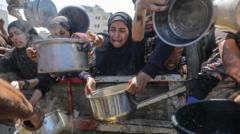
Hamas’s tactics of distributing food parcels to its own supporters have increased resentment among the general population, who often feel neglected and unfairly treated. Some residents accuse Hamas of hoarding aid intended for the broader public and only providing resources to its affiliates—further fuelling the public outcry during a time of deep crisis.
Nisreen Khaled, a widow and mother of three, expressed the pain of seeing Hamas-affiliated families receive aid while she struggles to feed her children. "They are not the solution to our suffering," she declared, calling into question the priorities of a group that continues to persist in military action while its citizens face starvation and displacement.
The situation in Gaza has reached extreme levels of inflation, with prices for basic goods skyrocketing. The cost of a kilogram of flour has soared to $80, a disturbing record high that leaves many families struggling for sustenance. In this volatile environment, receiving salaries has become a perilous task, given that Israel frequently targets the channels through which Hamas facilitates its payments.
Typically, employees like police officers and government workers receive discreet messages that lead them to designated locations to receive their earnings from unnamed distributors. One Hamas Ministry of Religious Affairs employee, who wished to remain anonymous for safety reasons, recounted a terrifying experience where he faced the possibility of never returning home after collecting his wages. "Every time I go to pick up my salary, I say goodbye to my wife and children," the employee lamented, illustrating the desperate measures he takes to support his family.
A schoolteacher known as Alaa, who provides for a family of six, received a sum of 1,000 shekels ($300) in damaged banknotes, causing him further distress as he sought to provide for his children amidst widespread hunger. "I honestly don't know what to do with the unusable cash," he expressed, highlighting the dire need for food that drives him to aid distribution points.
Despite some claims of financial disruption due to Israeli military strikes, insiders suggest that Hamas had amassed approximately $700 million in cash reserves prior to the ongoing conflict, kept hidden in underground tunnels. This financial maneuvering has allowed Hamas to sustain itself even amidst heightened military engagements.
The group historically relied on taxes and import duties levied on the people of Gaza, while also receiving support from external sources like Qatar and the Iran-backed Qassam Brigades. In light of the ongoing war, Hamas has intensified revenue collection through taxes on traders and exorbitantly priced goods, including cigarettes, which have increased in price by as much as 3,400%.
Hamas’s tactics of distributing food parcels to its own supporters have increased resentment among the general population, who often feel neglected and unfairly treated. Some residents accuse Hamas of hoarding aid intended for the broader public and only providing resources to its affiliates—further fuelling the public outcry during a time of deep crisis.
Nisreen Khaled, a widow and mother of three, expressed the pain of seeing Hamas-affiliated families receive aid while she struggles to feed her children. "They are not the solution to our suffering," she declared, calling into question the priorities of a group that continues to persist in military action while its citizens face starvation and displacement.