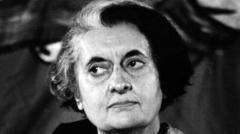
During the mid-1970s, amid Prime Minister Indira Gandhi's imposition of the Emergency, India underwent a critical reevaluation of its democratic framework. Under this authoritarian rule, civil liberties were curtailed, and numerous political adversaries were imprisoned. Historian Srinath Raghavan elaborates in his book, "Indira Gandhi and the Years That Transformed India," on how Gandhi's government, veiled in a facade of power, plotted a radical departure from democratic norms towards a more centralized governance structure.
The push for a presidential system, influenced by the governance model of Charles de Gaulle in France, sought to consolidate executive authority, diminish judicial oversight, and transform Parliament into a mere formality. It initiated with BK Nehru, a seasoned diplomat and loyal aide to Gandhi, advocating for the consolidation of power during a time when parliamentary democracy was deemed inadequate by him. He posited that a president elected directly by the populace could make vital but potentially unpopular decisions without the constraints that parliamentary dependencies imposed.
According to Prof Raghavan, Nehru's vision involved a seven-year presidential term, changes in electoral representation, constrained judicial powers, and even the reassessment of fundamental rights—suggesting their non-justiciability. Gandhi showed initial interest in these radical changes but cautiously avoided being seen as endorsing them publicly. Nevertheless, the ideas found enthusiasm among senior Congress leaders eager to bolster Gandhi's authority amid the political turmoil of the time.
As discussions on these proposals unfolded, a document titled "A Fresh Look at Our Constitution: Some Suggestions" emerged, advocating dramatic expansions of presidential powers. This draft suggested that a president could have even broader authority than their American counterpart—further marginalizing the judiciary and subverting the balance of power established in the Constitution. While the proposal never became official policy, its ripple effects were felt in the Forty-second Amendment Act passed in 1976, which significantly augmented Parliament's powers and hindered judicial review.
The crackdown on constitutional checks soured over time, leading to a swift action by the Janata Party—an opposition coalition that aimed to reestablish democratic norms following Gandhi's defeat in 1977. Amendments were enacted to dismantle the authoritarian elements introduced during the Emergency.
Although Gandhi regained power in 1980, whispers of greater presidential authority resurfaced. In 1982, as President Sanjiva Reddy's term neared its end, Gandhi contemplated a transition from Prime Minister to President, viewing it as a strategic move to rejuvenate her party. Ultimately, she chose to elevate her ally Zail Singh to the presidency instead.
Despite temporary flirtations with the idea of a presidential system, India remained a parliamentary democracy. The Emergency period served to highlight internal tensions within Congress regarding governance, illustrating a persistent yearning for power centralization without the actual shift to a reliable presidential framework ever materializing. Political dilemmas and a fragmented coalition dynamic remained barriers to such shifts as the discourse ceased abruptly following Gandhi's assassination in 1984, steering India decisively back from the brink of presidential governance.