In brief
President Trump stated that he refrained from launching a military attack on Iran initially scheduled for Tuesday, acting on the advice of leaders from Qatar, Saudi Arabia, and the UAE. As negotiations for an acceptable deal progress, Trump insists that if such a deal is not reached, the US will remain ready for military action. A senior Iranian military commander warned against making strategic errors, while public sentiment shows increasing disapproval of Trump's war strategies, with 64% believing the military engagement was a mistake.
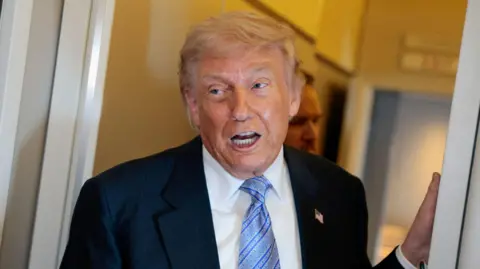
US President Donald Trump has announced that he is postponing a military attack on Iran that was planned for Tuesday at the request of Gulf states, citing 'serious negotiations' currently underway.
In a post on Truth Social, Trump mentioned that the leaders of Qatar, Saudi Arabia, and the United Arab Emirates urged him to delay the strike. He expressed optimism about a potential deal that he described as 'very acceptable' to the US, asserting, 'NO NUCLEAR WEAPONS FOR IRAN!'
However, Trump cautioned that the US is prepared to engage in a 'full, large-scale assault of Iran, on a moment's notice' should negotiations fail to yield satisfactory results.
A senior Iranian military commander responded with a warning against making 'strategic mistakes and miscalculations' again.
Trump's announcement coincides with a decline in his approval ratings, coinciding with escalating unpopularity of the conflict. A recent New York Times/Siena poll revealed that 64% of voters feel that the decision to go to war with Iran was incorrect. Moreover, only 37% of voters approve of Trump's performance in office.
This latest development follows massive airstrikes on Iran by Israeli and US forces since February, with Iran vowing to respond vigorously. The situation remains tense, especially with fears regarding Iran's potential retaliation and its influence over oil transportation through the Strait of Hormuz.
A ceasefire established in April to facilitate talks has been observed, but both parties remain engaged in hostile rhetoric, highlighting the fragility of the current conditions.