In brief
One year into Ahmed al-Sharaa's leadership following the fall of the Assad regime, Syria grapples with reconstruction and sectarian strife. While his presidency has brought initial stability, challenges from extremist factions and unresolved societal divides threaten the progress made.
One year ago, the war that President Bashar al-Assad seemed to have won was turned upside down.
A rebel force had broken out of Idlib, a Syrian province on the border with Turkey, and was storming towards Damascus. It was led by a man known as Abu Mohammed al-Jolani, and his militia group, Hayat Tahrir al-Sham (HTS). His real name is Ahmed al-Sharaa. Now, one year later, he is interim president, and Assad is in gilded exile in Russia.
Despite the devastation, Syria feels less heavy without the Assads' oppressive presence, but the new leadership must navigate a plethora of pressing issues. Many Syrians live in skeletal buildings, remnants of war. Sharaa has gained support from international partners, but faces significant challenges internally, including control over regions not under his authority such as the north-east where the Kurds hold sway.
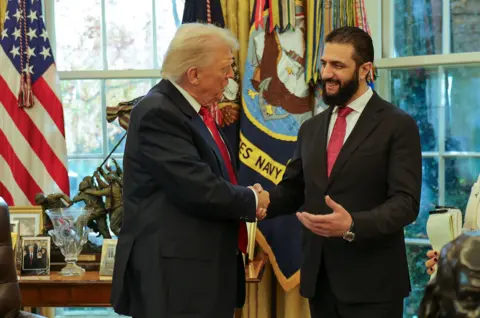
In May, Sharaa engaged in talks with Saudi Crown Prince Mohammed bin Salman, receiving support to become Syria's central figure for stabilizing the country. However, he must contend with the distrust of many Syrians aware of his extremist past and the ongoing threats from radical factions like ISIS.
Recently, the country witnessed sectarian violence, particularly in Alawite regions, with a continuing risk of escalation as communities clash. The UN has voiced concerns over security forces and affiliated groups involved in abuses, while Sharaa’s government struggles to establish a reliable rule of law.
Despite the lightening atmosphere in terms of political oppression, the reality for many remains bleak. There are no effective rebuilding funds, and the government lacks a coherent strategy for addressing the deep-seated issues resulting from nearly 15 years of civil war. As the country moves towards a new chapter, the voices of civilians yearning for peace echo through the rubble, highlighting the fragile path ahead.