In brief
A long-awaited trade agreement between the US and India has been tentatively reached as President Trump reduces tariffs on Indian exports. This decision is met with optimism in India but also raises questions about the specifics of the deal and the commitments made. Trade analysts express caution, urging clarity before full celebration.
US President Donald Trump's decision to lower reciprocal tariffs on India from 50% to 18% has been met with a sense of relief in Asia's third-largest economy, even as precise details on the agreement remain sketchy.
India paid the highest tariffs in the world after Trump raised import duties on Indian goods from 25% to 50% in August last year, citing Delhi's purchase of discounted Russian oil as funding for Moscow's war in Ukraine.
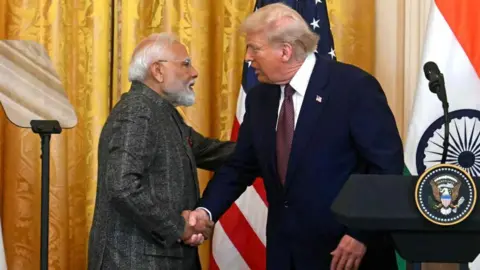
After his call with India's Prime Minister Modi on Monday, Trump claimed Modi had agreed to stop buying Russian oil, and buy much more from the United States, and potentially Venezuela.
India has not commented on these claims directly, but Modi thanked Trump on behalf of the 1.4 billion people of India for this wonderful announcement, expressing hopes to elevate the partnership with the US to unprecedented heights.
This positive turn follows a period of strain in US-India relations, with exports from India to the US plummeting across key sectors including textiles, seafood, and jewelry.
Trump's tariffs previously pushed the Indian government to expedite alternative trade agreements, diversifying its export markets. Just last week, India and the EU announced a significant trade deal removing tariffs on up to 90% of goods.
While the announcement was welcomed by Indian industry, experts caution that the specifics of Trump's announcement leave many questions unanswered, such as which products are covered and the timeline for implementation.
The associations representing textile exporters celebrated the agreement, believing it allows for better competition in the US, now their largest market.
However, analysts warn that until there's a formal joint statement and clarity on enforceability, the announcement should only be seen as a preliminary political signal rather than a finalized deal.
Trade experts suggest that geopolitical contexts should also be considered, as better relations between the U.S. and India could alter the dynamics of India's engagements with China and Russia, who have strengthened ties as a response to U.S. tariffs.
Moving forward, both India and the U.S. governments have indicated that further negotiations are expected, aiming for a comprehensive trade deal in the coming months.