In brief
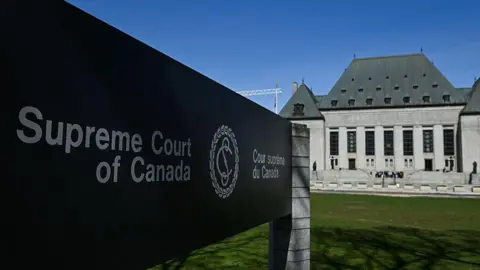
A critical constitutional case is underway at the Supreme Court of Canada, examining the implications of Quebec's Bill 21, which bans public servants from wearing religious symbols. Legal experts warn that the outcome may redefine the balance of power between elected officials and the judiciary, testing national unity as various groups, including the federal government, intervene to challenge the law's constitutionality.
A controversial secularism law in Quebec is heading to Canada's Supreme Court - but the outcome will impact much more than religious expression in Canada, legal experts say.
The case has the potential to test national unity and the balance between courts and elected officials.
This case is probably going to be the most important constitutional case in a generation, said Christine Van Geyn, executive director at the Canadian Constitution Foundation.
At the heart of the case is Bill 21, which bars civil servants like judges, police officers, and teachers from wearing religious symbols at work. Passed in 2019 by the governing Coalition Avenir Quebec (CAQ), it has faced significant legal challenges.
To withstand these challenges, legislators included a controversial legal mechanism known as the notwithstanding clause, which allows the government to override certain constitutional rights, including freedom of religion and equality rights.
The Canadian Civil Liberties Association has criticized Quebec’s legal arguments as spine-chilling, raising concerns about potential future abuses of this legal loophole to infringe on fundamental rights.
Hearings in the Supreme Court will commence on Monday, involving over 50 interveners, including the federal government, indicating widespread interest in how this law will be adjudicated.
What is Bill 21?
Quebec's secularism law reflects a commitment to religious neutrality in state institutions, similar to the notion of separation of church and state seen in the US. However, practical implications of this law have sparked significant debate.
Supporters argue that Bill 21 is an essential step towards ensuring a secular state, while opponents contend that it discriminates against religious minorities, particularly impacting Muslim women.
The Quebec government maintains that the law is necessary to uphold state neutrality and supports a collective civic identity, emphasizing the need for political resolution through the application of the notwithstanding clause.
Why does Canada have a notwithstanding clause?
The notwithstanding clause is a part of Canada's Charter of Rights and Freedoms, included during the constitutional repatriation in the 1980s to ensure provinces could retain legislative power without judicial overreach.
Although primarily utilized to shield controversial legislation from judicial review, its use in recent years has raised concerns about it being applied beyond traditional boundaries, prompting calls for clearer limitations on its invocation.
How the case is testing national unity
As the federal government pushes for limits on the clause's use, the response from provincial leaders indicates potential fractures in Canadian unity, with many arguing Ottawa's stance undermines provincial sovereignty.