In brief
The European Court of Justice (ECJ) has declared that Hungary's anti-LGBTQ laws, introduced by Viktor Orbán's government, violate European Union rules and fundamental rights, marking a precedent for the EU's commitment to equality and human rights. The ruling follows a recent political shift in Hungary, with the new government facing pressure to amend the discriminatory legislation. This decision not only challenges Hungary’s legal framework but also sets a significant precedent for other EU member states regarding adherence to shared values of equality and pluralism.
The European Union's top court has ruled that Hungarian anti-LGBTQ laws violate EU rules and infringe on its values of equality and minority rights.
The laws were introduced by Viktor Orbán's government in 2021, prohibiting what it deemed the 'promotion' of homosexuality or gender change to minors, under the guise of child protection.
This unprecedented ruling by the European Court of Justice (ECJ) established that the Orbán reforms breached EU principles, specifically infringing the founding values set out in Article 2 of the EU Treaty.
Delivered shortly after Hungarians voted to end Orbán's lengthy rule, the ECJ's decision highlighted how the Hungarian law impedes rights including discrimination bans based on sex and sexual orientation, personal and family life respect, and freedom of expression and information.
Further findings indicated that the law stigmatized transgender individuals and marginalized the LGBTQ community, associating them with offenses like pedophilia.
The legislation was deemed detrimental to the core identity of the EU, which champions pluralism and equality.
Legal analysts have characterized the ruling as historic, asserting that it underscores the inviolability of rights within society. John Morijn, a professor of law, noted that it signifies that societal rights cannot be compromised.
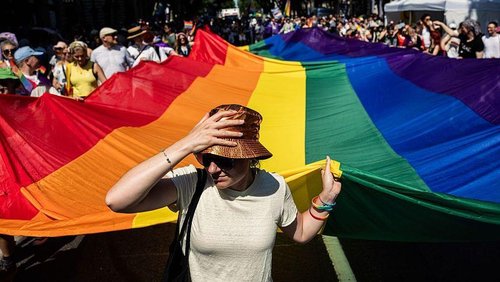
Despite previous bans, public events like Budapest's Pride march continue to face legal challenges, with prosecutors targeting the local mayor for his participation.
The European Commission has indicated that revisiting the anti-LGBTQ law will be a critical issue for Hungary's new government, led by Péter Magyar, and emphasized the necessity for compliance with the court's ruling.
Activists stress that there is now a pressing obligation for Hungary to reverse its discriminatory legislation and that this change should be prioritized by the new administration.