In brief
A new study reveals that massive octopuses, which could grow up to 62 feet long, roamed prehistoric seas as potential top predators. Despite historical underrepresentation, their unique jaw structures indicate they could have been formidable hunters, often competing with sharks and marine reptiles.
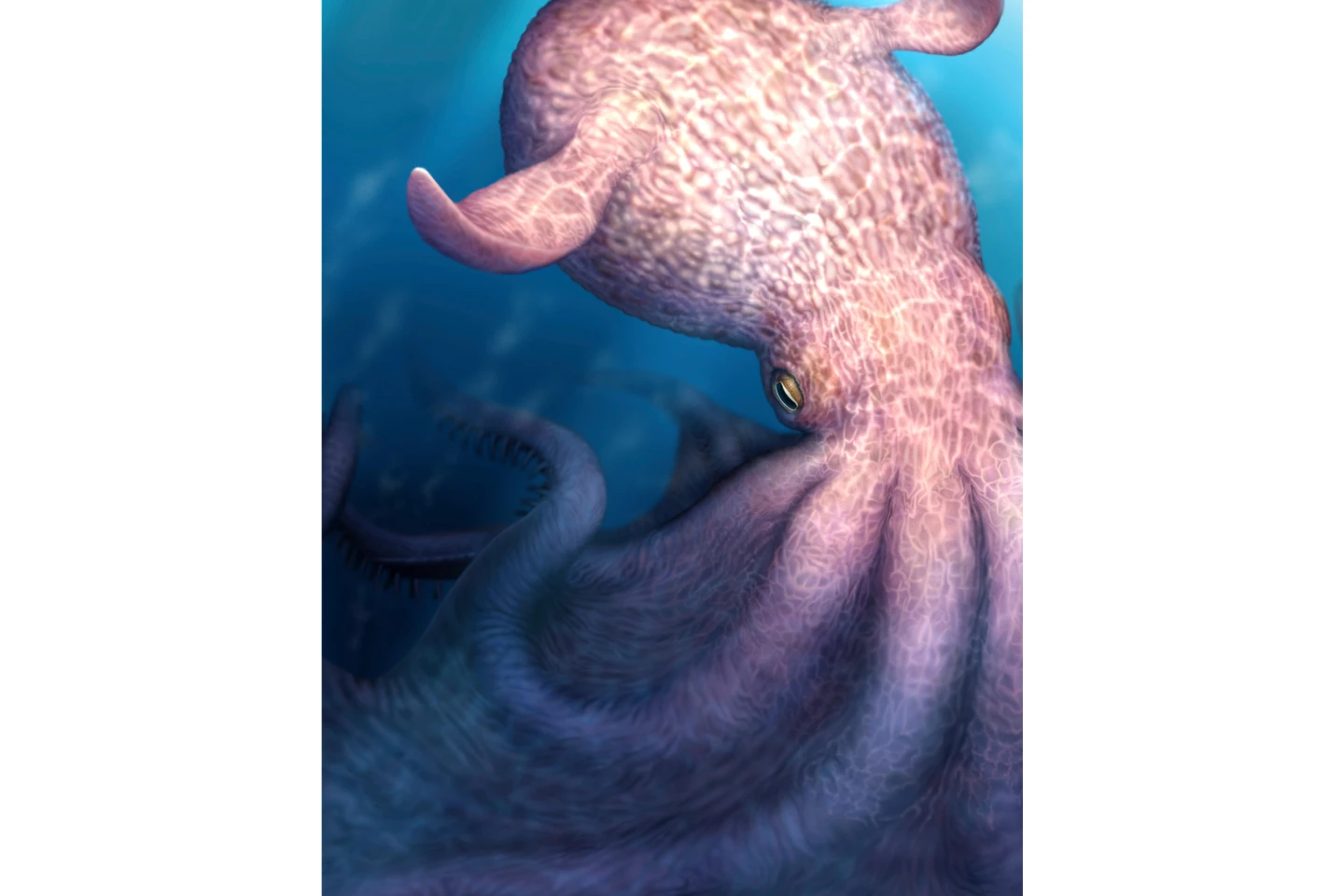
NEW YORK (PulseWire) — Fossil studies reveal that the dominant predator of ancient seas 100 million years ago may have been the octopus, specifically massive kraken-like creatures. These octopuses likely grew to lengths surpassing 60 feet (18 meters), rivaling other marine hunters of the time.
University of Alabama paleontologist Adiel Klompmaker expressed that 'these krakens must have been a fearsome sight to behold.' The late Cretaceous waters are often depicted as ruled primarily by sharp-toothed sharks and sea reptiles like mosasaurs and plesiosaurs, leaving octopuses overlooked.
Previously, scientists focused on smaller octopus species or relatives from the era, particularly due to the challenge of preserving their soft bodies in fossil form. However, this study involved the analysis of ancient fossilized jaws from Japan and Canada, leading to stunning insights into their size and predatory capabilities.
Using innovative techniques termed digital fossil mining, the researchers uncovered and analyzed 15 ancient octopus jaws and identified an additional 12 from Japan. Their findings suggest these ancient octopuses had significant wear on their jaws, indicating they crushed hard prey, possibly competing with the era's other formidable predators.
While the diet and ecological interactions of these creatures remain speculative, the results encourage further exploration into octopus fossils to enhance our understanding of ancient marine ecosystems.
Paleontologist Neil Landman commented on the vast potential of fossil discoveries that could provide more insights into ancient food webs, as the research could reshape our understanding of marine predation in prehistoric times.
The study was published in the journal Science, marking a pivotal moment in paleontological research focused on cephalopods.