In brief
In response to soaring fuel costs exacerbated by the ongoing Iran war, hundreds of transport workers in the Philippines have initiated a two-day strike. Diesel and petrol prices have doubled, contributing to a state of national energy emergency in the country. Striking workers are demanding an end to fuel taxes, regulatory changes, fare hikes, and government aid. Commuters in Manila are already feeling the impact of the strike as they face transportation disruptions.
Hundreds of transport workers in the Philippines' capital Manila have gone on strike over rising fuel costs.
Diesel and petrol prices have more than doubled since the Iran war broke out on 28 February - with the Philippines now in a state of national energy emergency.
One 62-year-old driver in Manila told the BBC the situation was getting increasingly desperate, saying he had no food to support his five children and had not received any cash aid from the government.
As the two-day strike started on Thursday, a ship carrying more than 700,000 barrels of Russian crude oil arrived in the country.
Press Secretary Claire Castro reported that the Sierra Leone-flagged Sara Sky, delivering the crude shipment, arrived earlier this week.
President Marcos had promised to look for new sources of oil as the country had been relying on supplies passing through the Strait of Hormuz for 98% of its requirements.
Transportation coalitions have presented demands including scrapping fuel taxes, rolling back oil prices, and introducing state controls. They are also asking for fare increases and higher wages.
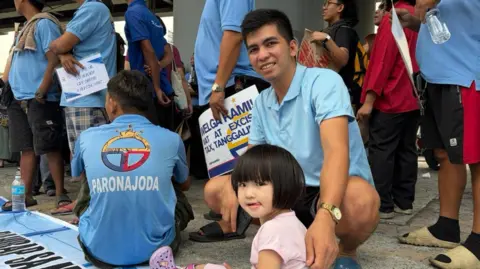
Protesters gathered across the capital, holding signs and demanding government action to address their plight.
Many protesters included jeepney drivers, as well as motorcycle and car ride-hailing drivers.
Some drivers reported not receiving a promised aid of 5,000 pesos ($83); one driver lined up for hours to be told his name was not on the list.
Guillermo Japole expressed despair over not receiving any aid while his family faces eviction.
Another driver, Anjo Lilac, brought his daughter to the protest, explaining his financial struggles due to lack of aid.
Many jeepney drivers are now considering leaving Manila to seek work elsewhere.
Ronnie Rillosa, a driver for 30 years, voiced feelings of despair over the ongoing situation.
Commuters are facing challenges during the strike as Manila is one of the most congested cities in Asia.
Arnold Irinco, a commuter, expressed understanding for the striking drivers and their grievances.
National Energy Emergency Declared
Earlier on Wednesday, President Marcos signed a law empowering him to suspend or cut the excise tax on petroleum products when certain price thresholds are exceeded.
Since the conflict in the Middle East, the government has implemented various measures to mitigate fuel shortages.
The Philippines is the first country to declare a state of energy emergency linked to ongoing global tensions.
Not everyone is satisfied; labor groups criticize the government's response to the crisis.
Manuel V. Pangilinan, a business leader, supports the government's emergency measures amidst high energy costs.