In brief
In Tehran, daily life is overshadowed by economic instability and the looming prospect of renewed war. Residents, from shopkeepers to ordinary citizens, express their struggles with rising costs and job losses, compounded by a tough government crackdown on freedoms. Amid this adversity, some cling to hope for a better future while facing harsh realities.
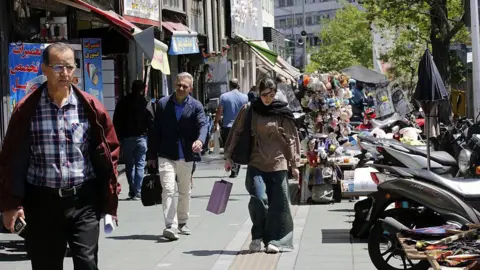
On a bright Tehran spring day, Sanaei Ghaznavi street, with its mix of shops selling groceries and household goods alongside fast food and flowers, seems like an everyday place.
In a country where lives have long been buffeted by crises, it is a snapshot of a people just trying to get through the day while their future hangs on forces beyond their control.
For Mohammad, in t-shirt and jeans, even cranking open the striped awning of his family's shoe shop is an act of hope. It makes me happy to be in here, he tells us when we wander into his pocket of a store with its floor-to-ceiling shelves of trainers, big and small. So many people have lost their jobs and aren't working. And there are few customers.
One Iranian website, Asr-e Iran, recently cited an unofficial estimate that up to four million jobs may have been lost or impacted by the combined effect of the war and the government's near-total internet shutdown. This is a norm in a city where many continue to hold a glimmer of hope even amidst relentless challenges.
As prices triple for essential goods like bread, ordinary citizens lament the economy's state while coping with ever-tightening restrictions and a palpable military presence on the streets. Their voices tell a stark tale of resilience in such uncertain times.
The mood around town oscillates between despair over economic conditions and cautious optimism that peace talks might lead to better days ahead. Yet, some believe that a return to conflict could, paradoxically, pave the way for necessary reforms.
In Tehran's cafés, life carries on with stark contrasts—a society eagerly navigating between tradition and modernity, challenges and dreams as they seek out brief moments of joy and normalcy while looking ahead to an uncertain future.