In brief
With the Iranian economy deteriorating and war on the horizon, everyday life in Tehran is marked by financial scarcity and uncertainty. This report provides a deep dive into the experiences of residents, revealing their hopes, frustrations, and the impact of a potential return to conflict.
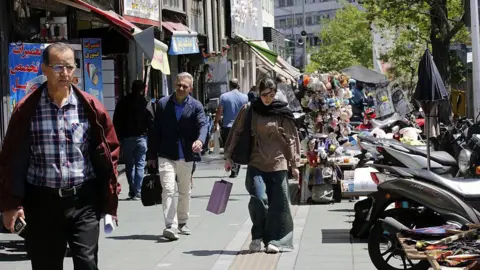
On a bright Tehran spring day, Sanaei Ghaznavi street, with its mix of shops selling groceries and household goods alongside fast food and flowers, seems like an everyday place. In a country where lives have long been buffeted by crises, it is a snapshot of a people just trying to get through the day while their future hangs on forces beyond their control.
For Mohammad, in t-shirt and jeans, even cranking open the striped awning of his family's shoe shop is an act of hope. It makes me happy to be in here, he tells us when we wander into his pocket of a store with its floor-to-ceiling shelves of trainers, big and small. So many people have lost their jobs and aren't working. But there are few customers.
We had so many before, his father Mustafa laments glumly, explaining this business has been in their family for 40 years. One Iranian website, Asr-e Iran, recently cited an unofficial estimate that up to four million jobs may have been lost or impacted by the combined effect of the war and the government's near-total internet shutdown.
Outside a nearby shop, Shahla, an elderly woman in a pale headscarf, balances a loaf of bread on her clipboard and complains, People are paying three times more for a loaf of bread now. People are going through hell just to pay for bread.
As conversations reveal a collective weariness, there's a sense that despite the heavy clouds of uncertainty looming overhead, many still seek to find joy in the ordinary aspects of life. Meanwhile, the streets illustrate a culture of resilience, even as the government tightens security amid the deteriorating economic situation.
As night falls, the contrast within the city's nightlife becomes apparent, revealing both a vibrant cafe culture and the palpable tension of government presence. Iranians strive to balance their daily lives with the ongoing uncertainties posed by their economic landscape and geopolitical tensions.