In brief
In the wake of ongoing conflict in the Middle East, air traffic controllers and pilots have adapted their strategies to ensure safe flight operations. With increased air traffic and complex rerouting, they work diligently to manage congested airspace while maintaining passenger safety. This article highlights the challenges they face and the measures taken to navigate through perilous skies.
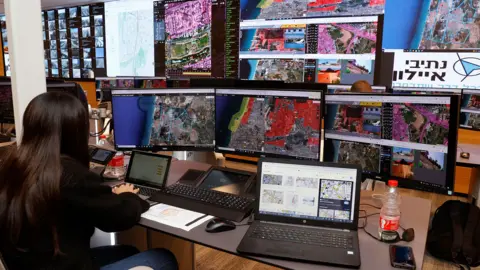
For the last fortnight, as drones and missiles have whistled through the skies above Iran and the Gulf, air traffic controllers have been shepherding passenger jets through safer but congested airspace on the edge of the war.A glance at a flight tracker map shows how busy Egypt and Georgia have become. Working side-by-side, each controller looks after a different section of the map, coordinating with colleagues on which planes are entering and leaving their airspace. On a normal day, an individual controller might manage six aircraft in their area at a time. But when there's war, it could be double that.The brain can only give that amount of concentration at that level of intensity for 20-30 minutes, says retired air traffic controller Brian Roche, who spent 18 years in the job, first for the Royal Air Force and then for passenger jets. During busy periods, more controllers are brought in to manage the greater volume of aircraft and are rotated more frequently to avoid overwhelming any one individual. Shifts during conflict are now likely limited to 20 minutes of intense monitoring followed by a break of equal duration.The tragedy of Malaysia Airlines MH17, shot down over eastern Ukraine in 2014, serves as a stark reminder of the dangers faced by passenger planes. Ukraine was in a low-level conflict then, yet the escalation into the air resulted in significant loss of life. Controlling flight paths amidst a war entails serious responsibilities. When airspace restrictions arise, controllers communicate with pilots about rerouting and fuel management, while ensuring vertical and horizontal separation of planes, particularly given that larger passenger jets can create turbulence for those around them.As tensions in the Middle East escalate, pilots have had to prepare for rerouted flights. Airlines plan these diversions in advance, anticipating when and where conflicts may arise and taking necessary precautions, including carrying extra fuel. Hannah, a cabin crew member, underscores the unique importance of her role, especially during stressful situations for passengers. She emphasizes that cabin crew responsibilities extend beyond in-flight service, focusing on safety first and maintaining reassurance amidst the chaos. Diverted flights and altered schedules can disrupt work-life balance for airline crews, leading to adjusted routes to avoid conflict zones. Despite this, many like Hannah view their work as a passion and a lifestyle associated with deep camaraderie as an essential part of the global aviation family.