In brief
The NTSB's preliminary report indicates that a series of issues contributed to the March 22 collision at LaGuardia Airport, including heavy traffic, missing transponders on the fire truck, and an emergency response situation that overwhelmed air traffic controllers. The report noted that vital warning systems were compromised, ultimately leading to the tragedy that resulted in the deaths of two pilots and injuries to 39 individuals.
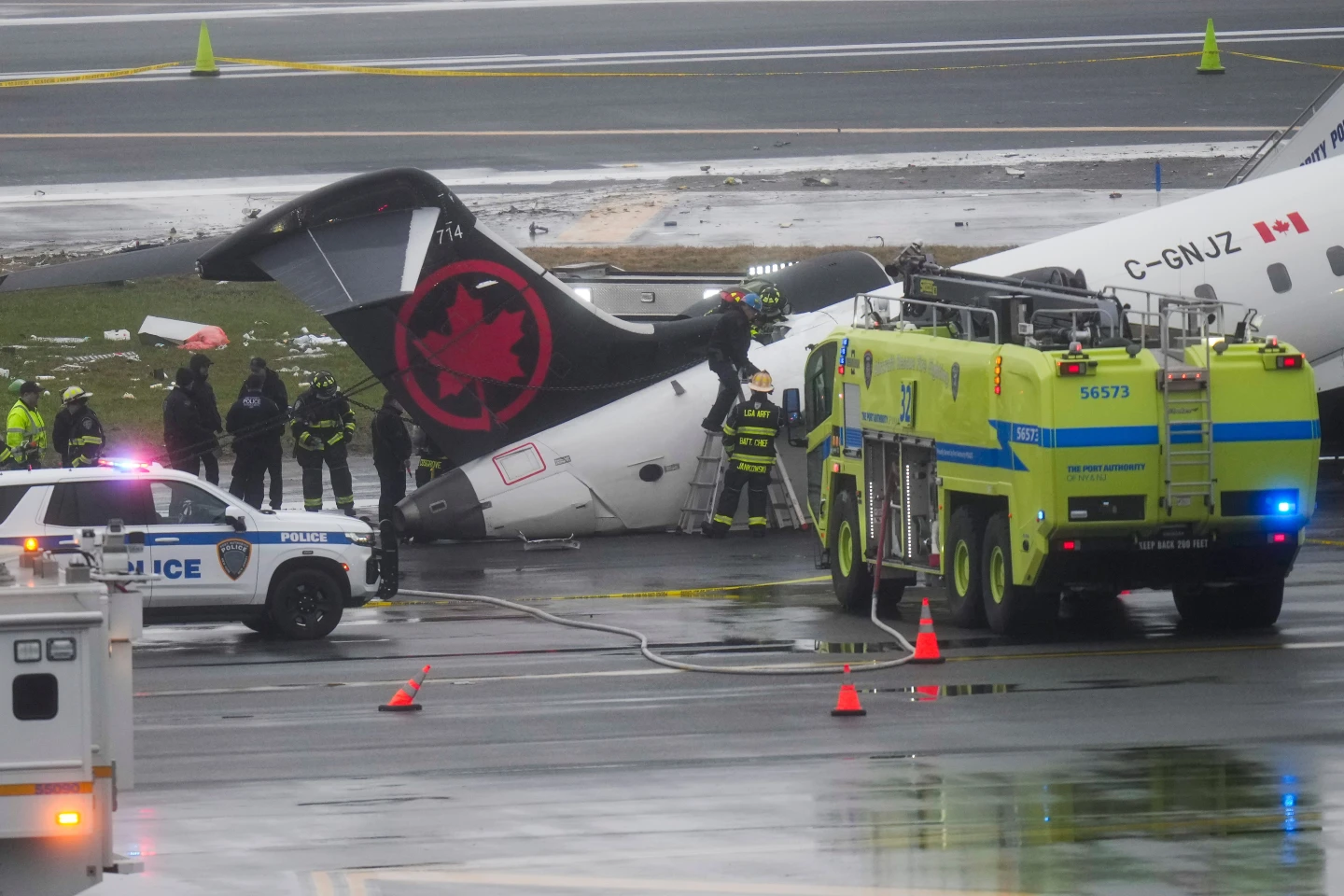
Federal investigators have released a preliminary report detailing the crucial failures that culminated in the deadly collision at New York's LaGuardia Airport on March 22. The incident involved Air Canada Express Flight 8646, which struck a fire truck as it landed, claiming the lives of two pilots and injuring 39 others.
Key findings from the National Transportation Safety Board (NTSB) highlighted that the fire truck failed to stop at a critical intersection due to overwhelmed air traffic controllers and a lack of transponder equipment, impairing crash detection systems. At the time of the incident, LaGuardia was experiencing unusually high traffic volume compounded by an emergency situation with another aircraft.
Busy Air Traffic Controllers
On the night of the crash, two air traffic controllers were assigned their duties amidst unprecedented traffic delays, with over twice the expected arrivals and departures. They also faced the additional stress of managing an emergency response to a reported odor on a United Airlines flight which further taxed their capacity to manage runway traffic effectively.
No Transponder on the Fire Truck
LaGuardia uses an advanced surveillance system designed to prevent runway incursions, but the fire truck and others in its convoy lacked the necessary transponder equipment. As a result, they could not be accurately tracked, leaving controllers unaware of their precise locations.
Red Lights Were On
Despite being cleared to cross the runway, the fire truck entered when red warning lights indicating an aircraft was in the area remained illuminated. These lights are designed to alert operators of impending dangers and should have prevented any vehicular movement onto the active runway.
‘Stop, Stop, Stop’
Just seconds before the crash, controllers recognized the impending collision and issued a warning to the fire crews. However, the command created confusion due to simultaneous communications meant for multiple vehicles, leading to critical delays in response from the fire truck crew.
The investigation is ongoing with safety experts calling for a thorough review of airport procedures to prevent such tragedies in the future.