In brief
Kaden Rummler was injured during a protest in Santa Ana against a federal shooting incident, leaving him blinded in one eye. The incident highlights escalating tensions between protesters and federal agents, raising concerns over the methods used by law enforcement in crowd control situations. Rummler's pursuit of justice may lead to legal action against the Department of Homeland Security.
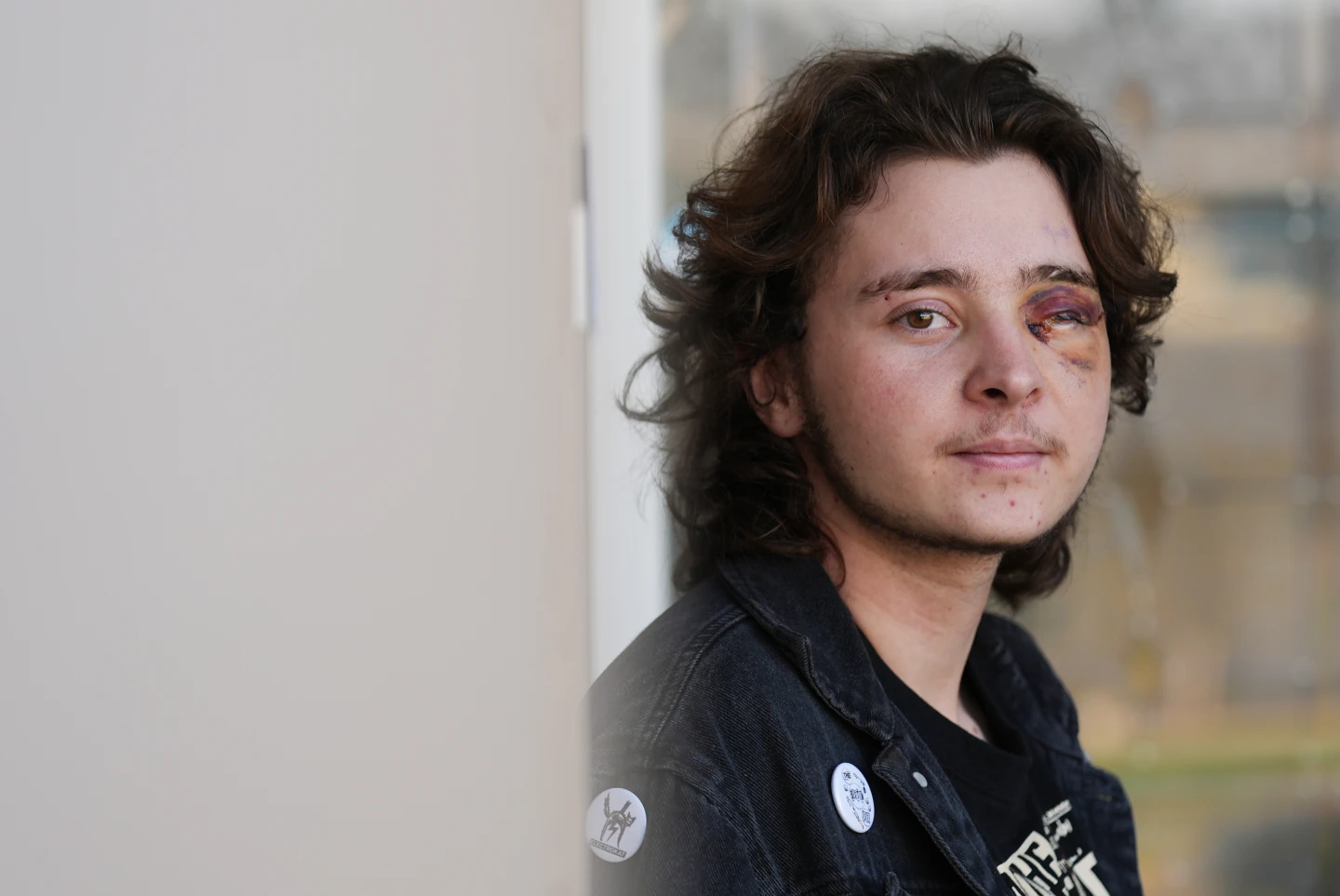
A 21-year-old college student named Kaden Rummler has shared the challenging reality he now faces after losing sight in one eye due to a projectile fired by a federal officer during a protest in Southern California. Rummler underwent a painful six-hour surgery following the incident that occurred on January 9, when demonstrators gathered to protest a federal shooting incident. With no depth perception, he expressed that his life has drastically changed.
Rummler's injury resulted from a high-velocity projectile, believed to be made of metal and plastic. He revealed details of the agonizing experience, as he now contemplates pursuing legal action. Rummler, who hopes to work in forestry, explained, “It’s going to affect every aspect of my life.”
Another protester, Britain Rodriguez, also suffered severe injuries during the same event, stating that he was hit in the face by a projectile while standing outside an immigration building.
According to reports, the Department of Homeland Security has not responded to inquiries about the type of projectile used during the confrontation. Tricia McLaughlin, assistant secretary at DHS, labeled Rummler's claims as “absurd” while arguing that the protesters displayed violent behavior, which has resulted in injuries to law enforcement officials.
Rummler faces misdemeanor charges for disorderly conduct, whereas another protester has been jailed under more severe charges related to assaulting an officer. Rummler's attorney has raised concerns regarding the potential toxicity of the projectile materials, seeking clarity that has not yet been provided by DHS.
Echoing broader issues of escalating violence during protests, academics have called for a thorough investigation into the federal agents’ use of force, especially in crowd control situations where high-intensity projectiles are deployed.
Despite his injuries, Rummler remains committed to social activism, stating, I refuse to sit around idly and watch that happen, and in 50 years, I would absolutely regret not trying to make a change. His case illustrates the critical tensions between law enforcement practices and the rights of peaceful protesters, and raises questions about the need for accountability in policing methods.