In brief
Chapal Bhaduri, known as Chapal Rani, was a leading male performer in Bengali jatra—a traditional folk theatre—who portrayed female characters with remarkable finesse. His dramatic career spanned over six decades, navigating the complexities of gender identity and societal shifts. A new book by Sandip Roy chronicles Bhaduri's starlit rise and subsequent obscurity, illustrating the evolution of jatra theatre amidst changing cultural landscapes and attitudes towards gender. Despite the decline of his art form, Bhaduri remains a symbol of resilience and artistry in a rapidly shifting world.
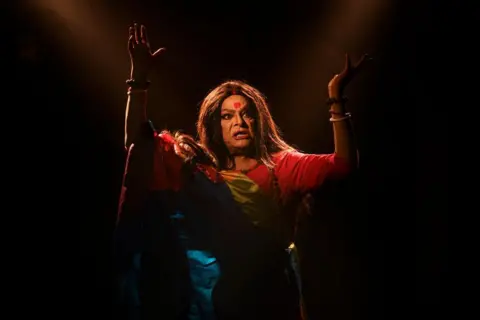
In mid-20th Century Bengal in eastern India, some of the biggest female stars on stage were actually men. Foremost among them was Chapal Bhaduri—better known as Chapal Rani—the reigning queen of jatra, a travelling theatre tradition that once drew vast, fervent crowds.
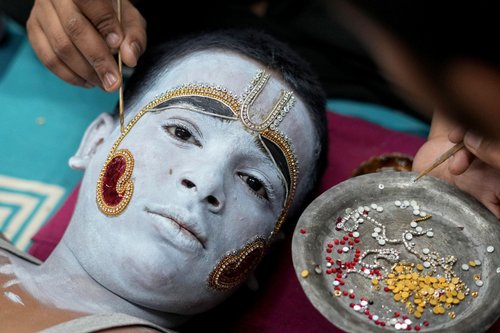
Male actors playing female roles were a familiar trope across global theatre, from Europe to Japan and China. In Bengal, the form flourished in jatra—a rural, open-air spectacle of music, myth, and melodrama that played out on all-sided stages, driven by heightened voice, gesture, and costume.
In a new book, Chapal Rani: The Last Queen of Bengal, writer Sandip Roy traces Bhaduri's journey from stardom to obscurity, capturing a vanishing world where gender itself was an act.
For decades, female roles in jatra were played by men known as purush ranis, or male queens. Yet even at its height, the form carried a certain stigma. Colonial-era urban elites in Calcutta dismissed jatra as rustic or unsophisticated. By the time Bhaduri entered the stage in the 1950s, that world was already shifting. Women had begun to take up acting roles, narrowing the space for female impersonators.
Born in 1939 in north Kolkata, Bhaduri began acting at age 16, transforming on stage into queens, courtesans, goddesses, and brothel madams with a studied grace. His performances were immersive, often deeply felt, and pushed back against the stereotype of gay characters in Indian theatre—a cultural landscape where queer-coded roles were frequently played for ridicule.
As the theatre world changed, Bhaduri faced challenges too. During one performance, he was booed off stage, highlighting a growing distaste for male actors in female roles. Ultimately, his career declined as the very conventions of jatra unraveled, giving way to a new era of female actors.
Despite intense public admiration and a complex off-stage life, Bhaduri navigated the margins of his legacy. He gradually fell from the spotlight while continuing to survive through odd jobs and fleeting visibility in documentaries and exhibitions. Today, Chapal Bhaduri lives in a retirement facility, prompting reflections on his life and the larger cultural histories that inform gender expression in theatre.