In brief
As America gears up for its 250th anniversary, the contributions of Black patriots during the American Revolution are being emphasized. The Lexington Minutemen honor the legacy of Prince Estabrook, who fought alongside his white neighbors in 1775. Recent programs aim to foster a clearer understanding of diverse contributions to America's founding, despite historical oversight in education. Historical estimates suggest over 5,500 patriots of color fought for independence, while current efforts to maintain their narratives face challenges.
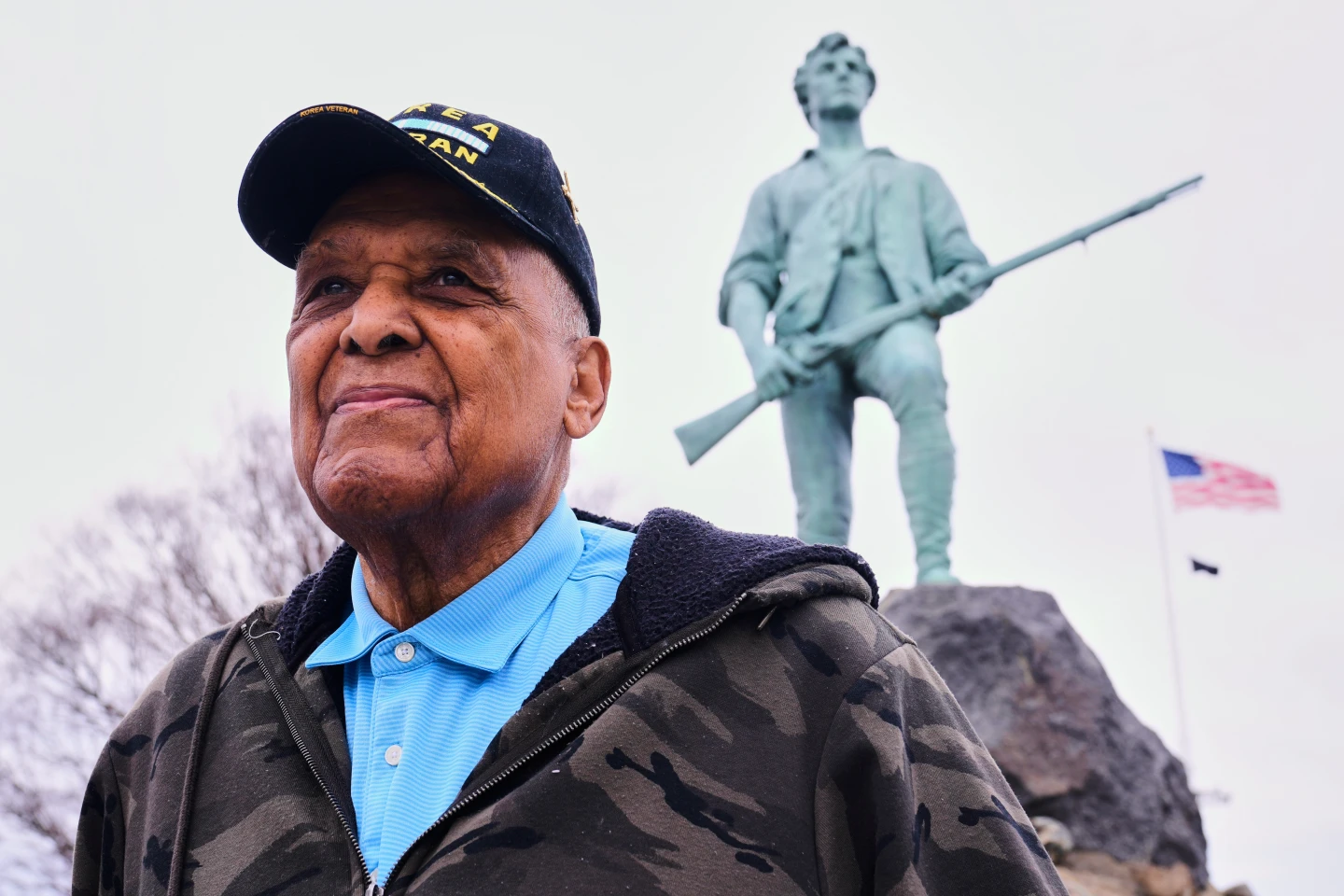
LEXINGTON, Mass. — Charlie Price reflects on his education about the American Revolution, noting a lack of knowledge beyond major figures like George Washington and events like the Battle of Bunker Hill. His perspective changed dramatically when he joined the Lexington Minutemen, a group dedicated to reenacting Revolutionary War events.
This year, as the Minutemen honor the dates of the Battle of Lexington, they include representations of soldiers like Prince Estabrook—an enslaved man who fought alongside his neighbors against British forces on April 19, 1775. Estabrook, despite being wounded, served numerous tours during the war.
Price, now 95 and a Black veteran of the Korean War, has portrayed Estabrook for fifty years and points out, I was surprised that there was one Black soldier out here. As the country approaches its 250th anniversary, events across the nation seek to highlight the histories of patriots of color, offering a more inclusive narrative of America’s founding.
Telling the Whole Story
Historically, American Revolution narratives have focused largely on figures like Washington and Franklin. Columbia University historian Christopher Brown notes this trend creates an idealized narrative that ignores the multifaceted contributions of Black and Indigenous soldiers. Recently, however, initiatives have emerged to paint a fuller picture of the diverse individuals who fought for liberty.
The National Park Service estimates that by the war's end, more than 5,500 Black and Indigenous patriots had served. Efforts to share these stories often struggle against political pressures that seek to minimize discussions about slavery and the diverse contributions of these soldiers.
Moreover, as Price emphasizes, acknowledging these stories is vital for recognizing the extensive contributions of individuals from diverse backgrounds. The importance of fostering curiosity and research into these topics is stronger than ever.
Highlighting Black Patriots
Recent grants from the MA250 program have supported projects that commemorate the battles leading to independence. Notable efforts include exhibitions celebrating figures like Crispus Attucks and Salem Poor, who represent the contributions of Black patriots during the Revolutionary period.
American Ancestors, a non-profit in Boston, is set to open its Patriots of Color exhibit, honoring the lives and efforts of 26 notable Black and Indigenous individuals during the Revolution. Descendants of some of these patriots are expected to attend the opening, underlining the importance of remembering and recognizing their ancestors' contributions.
Currently, Estabrook's life remains a significant testament to this narrative. Historical records reveal his journey from slavery in Lexington to becoming a soldier for independence. After the war, he gained his freedom, and his legacy lives on through the efforts of members like Price, ensuring these stories are told and remembered.