In brief
Following a tumultuous revolution that led to Sheikh Hasina's ousting, Bangladesh's political future hangs in the balance. Despite the youthful energy that toppled the old regime, fractures within the newly formed National Citizen Party and the resurgence of long-established parties, particularly Jamaat-e-Islami and the Bangladesh Nationalist Party, threaten to derail hopes for a progressive political landscape. As elections approach, the struggles of Gen Z activists for representation continue amid rising concerns over sidelining women and the allure of dynastic politics.
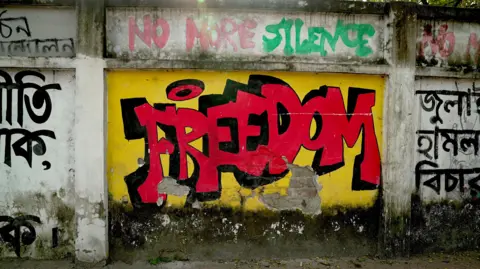
Rahat Hossain, nearly killed while attempting to rescue a friend during a vital youth uprising, embodies the struggle of a generation seeking change in Bangladesh. The protests, characterized as one of the bloodiest in the country’s history, led to the fall of Prime Minister Sheikh Hasina, symbolizing a significant shift in the political paradigm.
As Bangladesh approaches general elections, expectations are mixed. Although some student leaders initially believed they would play central roles in the new government, the reality is far more complicated. The youth-led National Citizen Party (NCP) is now exhibiting fractures and struggles to unify, while traditional parties like the Bangladesh Nationalist Party (BNP) and Jamaat-e-Islami are gaining strength and filling the political vacuum left by Hasina's Awami League.
Hossain recalls the day he lost his friend, Emam Hasan Taim Bhuiyan, to police gunfire during demonstrations on July 20, 2024. I had to leave him behind, he lamented, a haunting memory of the violence that catalyzed widespread protests that eventually toppled a regime. The United Nations reports that around 1,400 individuals lost their lives in the unrest.
The hope among many youth activists was to create a government grounded in equality and justice. However, the landscape indicates potential dominance by established parties, especially Jamaat-e-Islami, which has garnered unexpected support from younger voters who view the party as a victim of past oppressions.
Women, who played a significant role in the uprising, find themselves largely neglected in the current political restructuring. Male-dominated choices within the NCP and associations with Jamaat have led to disenfranchisement, with criticisms highlighting a failure to prioritize gender representation.
Significant events are on the horizon as Bangladesh gears up for a challenging election. Questions linger about whether the sacrifices made by the youth will translate into meaningful political advancement or whether old powers will reassert their dominance amidst cries for reform.