A federal judge on Saturday denied a state government request to block the Trump administration's deployment of thousands of federal immigration agents in Minneapolis, Minnesota.
In a ruling, District Court Judge Katherine Menendez said the immigration enforcement operation has had, and will likely continue to have, profound and even heartbreaking, consequences on the State of Minnesota.
However, she stated that state officials had not proved that the Trump administration's surge of US Immigration and Customs Enforcement (ICE) agents in Minneapolis was unlawful.
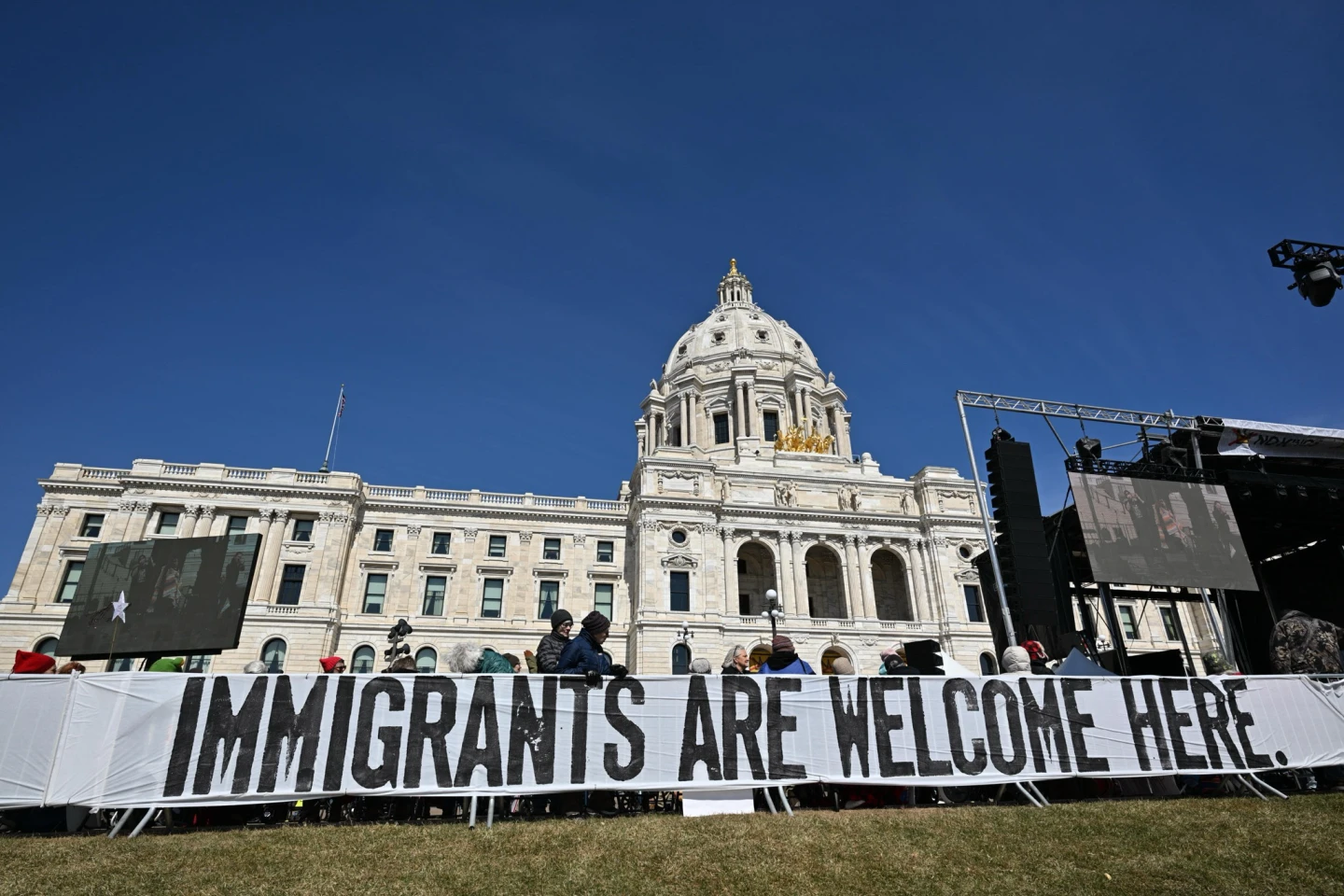
The ruling comes as thousands nationwide have taken to the streets to protest the fatal shootings of two US citizens by federal agents.
Demonstrators are expected to gather on Saturday afternoon in Minneapolis, following protests in cities across the US, including New York, Los Angeles, Chicago, and Washington DC, the previous day. Organisers called on Americans to stay home from work and school.
The deaths of Renee Good and Alex Pretti have sparked a public outcry across the country, receiving criticism from lawmakers in both parties.
Earlier on Friday, the US Justice Department opened a civil rights investigation into Pretti's death. The 37-year-old nurse was shot and killed by federal agents, the second Minneapolis resident to face such a fate since the surge began. Good was the first, killed by an ICE agent on January 7.
In her ruling, Judge Menendez noted evidence of racial profiling and excessive use of force by ICE agents; however, she indicated that state officials did not provide a clear metric to define when lawful law enforcement crossed into unlawful acts. The lawsuit argued that Trump's deployment of 3,000 immigration agents violated the state's sovereignty.
Nationwide protests dubbed the National Shutdown encouraged no work. No school. No shopping on January 30 to push for an end to ICE funding.
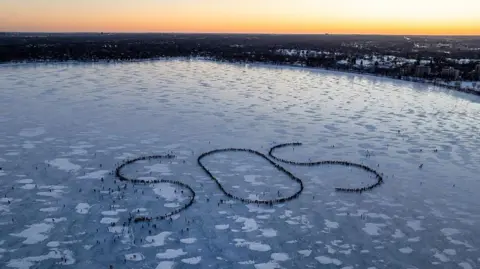
Protesters in Minneapolis even formed the letters SOS on a frozen lake to signify distress, and singer Bruce Springsteen performed a new song in homage to the victims at a concert in the city.
Federal operations labeled Operation Metro Surge have drawn backlash from residents in Minnesota, who have called for federal agents to withdraw. Critics argue that instead of targeting dangerous criminals, the operation is also affecting individuals with clean records.
According to the Department of Homeland Security, their aim is to arrest the worst of the worst criminal illegal aliens but many in the community feel wrongfully targeted.