In brief
The pioneering satellite, LignoSat, explores the potential for timber as a sustainable material in space missions.
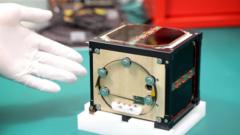
The world's first wood-panelled satellite has been successfully launched into space, marking a significant milestone in testing sustainable materials for future space exploration. The space mission, handled by a SpaceX rocket, introduces LignoSat, a compact satellite weighing only 900 grams, which will orbit the Earth for the next six months. Developed by Kyoto University researchers in Japan, LignoSat is designed to assess the feasibility of timber, specifically made from magnolia trees and constructed without screws or glue, as a potential renewable resource for space missions aimed at the Moon and Mars. “Wood is more durable in space than on Earth because there’s no water or oxygen that would rot or inflame it,” noted Koji Murata, a professor of forest science at the university. This innovative concept echoes the early 20th century when wood was commonly used for airplanes, suggesting a future where wooden satellites might become commonplace. The satellite not only features wood paneling but also includes conventional aluminum frameworks and electronic components. Equipped with solar panels and sensors, LignoSat will monitor how the wood withstands the harsh conditions of space, collecting valuable data during its six-month orbit. Dr. Simeon Barber, a space scientist from the UK, emphasized that while LignoSat isn’t composed entirely of wood, the research behind its creation is intriguing. He highlighted the renewable nature of wood and the potential for utilizing it on other planets for constructing shelters and sustaining human presence. Historically, wood has been utilized in spacecraft before; for instance, cork was employed in re-entry shields. Dr. Barber acknowledged that using wood could contribute to reducing pollution, as materials that burn up more easily could diminish metallic contaminants during re-entry. However, he cautioned that wood’s unpredictability as a structural material may limit its application for critical spacecraft components. As the space industry faces scrutiny over environmental impacts, researchers continue to explore innovative, less polluting materials like wood, which could redefine future space exploration efforts.