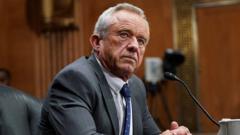
Holding a controversial stance on vaccines, Kennedy's nomination will now proceed to the broader US Senate for a vote. The Republican-controlled Senate, maintaining a 53-47 majority, has provided Kennedy a pathway, despite widespread scrutiny of his healthcare knowledge during committee hearings. Senators pressed Kennedy on vaccination policies and other topics, where he consistently defended his track record by claiming he supports tighter safety tests without opposing vaccines outright. However, his past remarks, particularly from a podcast where he claimed, "There's no vaccine that is safe and effective," raised eyebrows and concerns.
Senator Bernie Sanders notably acknowledged Kennedy's catchy "Make America Healthy Again" slogan yet confronted him with merchandise promoting anti-vaccine messages linked to the organization Kennedy led, which he insisted he no longer manages. While none of the Democrats were swayed by his testimony, Kennedy secured strategic support from Republican Senator Bill Cassidy. Cassidy's shift in stance came after he received significant commitments from Kennedy and the present administration.
Kennedy, a descendant of both Robert F. Kennedy and President John F. Kennedy, initially gained prominence as an environmental lawyer before becoming an outspoken critic of the US healthcare system. Following his unsuccessful presidential campaign as a Democrat, he supported Donald Trump, endorsing him after stepping down from his independent candidacy.
If confirmed, Kennedy will oversee various critical healthcare agencies, including the CDC, FDA, NIH, and CMS. He has expressed intentions to implement updates to food safety and examine the use of food additives in the US compared to European standards, although he reassured that vaccinations and fast-food bans would not be on the agenda. The upcoming Senate vote will determine his final confirmation as the US health secretary.
Senator Bernie Sanders notably acknowledged Kennedy's catchy "Make America Healthy Again" slogan yet confronted him with merchandise promoting anti-vaccine messages linked to the organization Kennedy led, which he insisted he no longer manages. While none of the Democrats were swayed by his testimony, Kennedy secured strategic support from Republican Senator Bill Cassidy. Cassidy's shift in stance came after he received significant commitments from Kennedy and the present administration.
Kennedy, a descendant of both Robert F. Kennedy and President John F. Kennedy, initially gained prominence as an environmental lawyer before becoming an outspoken critic of the US healthcare system. Following his unsuccessful presidential campaign as a Democrat, he supported Donald Trump, endorsing him after stepping down from his independent candidacy.
If confirmed, Kennedy will oversee various critical healthcare agencies, including the CDC, FDA, NIH, and CMS. He has expressed intentions to implement updates to food safety and examine the use of food additives in the US compared to European standards, although he reassured that vaccinations and fast-food bans would not be on the agenda. The upcoming Senate vote will determine his final confirmation as the US health secretary.