The impact of a flourish of the US president's pen in Washington a year ago continues to be felt on individual lives some 13,000km (8,000 miles) away in South Africa.
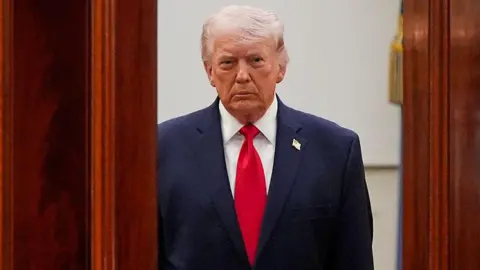
There was a collective gulp among some in the health sector here when, hours after he was inaugurated, President Donald Trump signed an executive order freezing US aid commitments.
For South Africa that meant the potential loss of an estimated $400 million (£295m) that the US contributed each year to the country's HIV programmes – representing about a fifth of what it was spending on the issue.
Last year, the government provided $46 million in response to the US decision - just 11.5% of what was lost.
The US also agreed on a bridge plan of $115 million that will last until the end of March instead of regular funding from the US President's Emergency Fund for Aids Relief (Pepfar).
Since being set up by President George W. Bush in 2003, the US government has invested over $110 billion in the global HIV-AIDS response through Pepfar, saving 26 million lives, according to the state department.
Many of those lives were in South Africa, where around 13% of the population are living with HIV, making it the country with the largest number of HIV-positive individuals globally.
Enormous advances in treatment and prevention over the decades have ensured many are alive who would not be otherwise, but these are expensive, and the loss of funding could put many at risk.
Prof. Linda-Gail Bekker, head and co-founder of the Desmond Tutu Health Foundation, states that there has been a reduction in testing and service gaps. Forty percent of her funding – around $8 million - came from the US government.
This funding was crucial for last-mile activities like finding people who haven't come in for care and providing services for those uncomfortable in public clinics.
Emergency funding mobilized by the South African government was insufficient compared to what was lost.
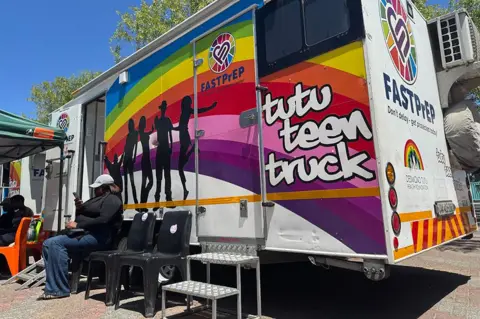
Mobile clinics funded by organizations like the Tutu Foundation are vital for reaching those in hard-to-access areas. On a bright summer day, a small group of young women stands outside such a clinic in Philippi, Cape Town.
One of them, Esethu, is at the clinic to receive preventive treatment. She shares her concerns over the potential closure of services if more funding is lost.
Health Minister Dr. Aaron Motsoaledi hopes to announce more HIV funding soon while working with other donors to fill the gap left by the US. Meanwhile, there is little sign that funding will resume from the US as they pivot towards bilateral deals with other nations.
Experts emphasize the necessity of sustaining treatment and prevention efforts to avoid an increase in new infections, a situation that could worsen due to the impact of funding cuts.