In brief
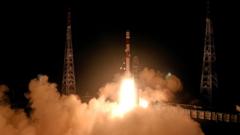
In a groundbreaking achievement, the Indian Space Research Organisation (Isro) accomplished its inaugural space docking test on December 30 by merging two small crafts in orbit, a pivotal step towards India's future missions including an eventual space station and human lunar exploration.
The historic mission, known as SpaDeX (Space Docking Experiment), launched from Sriharikota, saw the two crafts, dubbed Chaser and Target, initially separated after lift-off. Originally set for January 7, the docking was postponed multiple times for additional testing. But on January 5, Isro confirmed its success, placing India among a select group of nations, including the United States, Russia, and China, capable of such technology. With each spacecraft weighing approximately 220 kilograms (485 lbs), they were strategically separated by 10-20 kilometers to allow for precision maneuvering. Former NASA scientist Mila Mitra underscored the complexity of docking, explaining that the Chaser needed to be carefully aligned in the same orbit as the Target. The docking process unfolded methodically over several days, and after successfully reducing the distance to just three meters, the spacecraft were locked together, forming a secure channel for material transfer. This success paves the way for the planned transfer of electrical power between them, a step towards demonstrating capabilities for future inter-space satellite services. Moreover, the mission is testing critical scientific instruments, including a robotic arm intended for space debris management and other functions essential for space station operations. As part of its innovative approach, Isro is utilizing a segment of the launch vehicle to conduct experiments in a temporary orbital module carrying 24 payloads. Among these notable experiments was growing cowpeas in microgravity, a promising sign for food production in long-duration space missions. Overall, the SpaDeX mission represents a monumental stride for India's space program and its future endeavors, including its upcoming Gaganyaan mission aimed at human spaceflight. In the weeks ahead, as Science Minister Jitendra Singh highlighted, the data analysis from SpaDeX will provide invaluable insights, reaffirming India's growing prowess in the competitive arena of space exploration.