In brief
A23a's potential impact raises concerns for local ecosystems and communities as scientists and sailors closely monitor its movements.
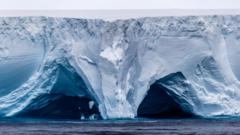
As the world's largest iceberg, A23a, approaches the remote British territory of South Georgia, environmentalists are increasingly anxious about the fate of the island's wildlife. This colossal iceberg, originally calved from the Antarctica's Filchner Ice Shelf in 1986, now spins northward towards South Georgia, dangerously close at just 173 miles (280km) away. Its anticipated arrival could lead to devastating consequences for the local populations of penguins and seals, as previous icebergs have blocked feeding access and caused mass fatalities among these animals.The iceberg, towering at about 1,312ft (400m), has started to fracture as warmer waters erode its base, shrinking in size from 3,900 sq km to approximately 3,500 sq km. An increasing number of scientists, sailors, and fishermen are scrutinizing satellite imagery to track its movements, hoping it veers off course. Sea captain Simon Wallace expressed a desire for it to miss South Georgia completely, noting the inherent dangers that icebergs pose to the wildlife in the region.In 2004, a different iceberg, A38, grounded on the coast of South Georgia, resulting in the deaths of numerous penguin chicks and seal pups. South Georgia is home to thriving colonies of King and Emperor penguins, as well as millions of elephant and fur seals, all of which are at risk if A23a collides. Experts like marine ecologist Mark Belchier predict continued impacts as icebergs persistently endanger both fisheries and wildlife.The challenges posed by such icebergs have intensified within the fishing community, making navigation increasingly perilous. Fisherman Andrew Newman reported on the presence of lingering iceberg debris, complicating their operations. Increased vigilance is essential as captaind Wallace noted the necessity of searchlights during nighttime operations to detect hidden ice, which can surface unexpectedly.While A23a's initial calving predates significant climate change impacts, rising temperatures are predicted to facilitate more frequent iceberg calving in the future. As A23a prepares for its final journey, it offers a unique opportunity for research. Scientists onboard the British Antarctic Survey's vessel, the Sir David Attenborough, collected valuable samples from the iceberg in 2023, examining how its meltwater might alter the carbon cycle in the southern ocean. PhD researcher Laura Taylor emphasized that meltwater rich in nutrients and phytoplankton can impact ocean chemistry.No one can predict A23a's next move, but one thing is clear: its arrival will be a crucial moment for the ecosystems of South Georgia, and its legacy could shape future climate research. As anticipation grows, an entire territory prepares for the monumental iceberg's looming presence on its horizon.